

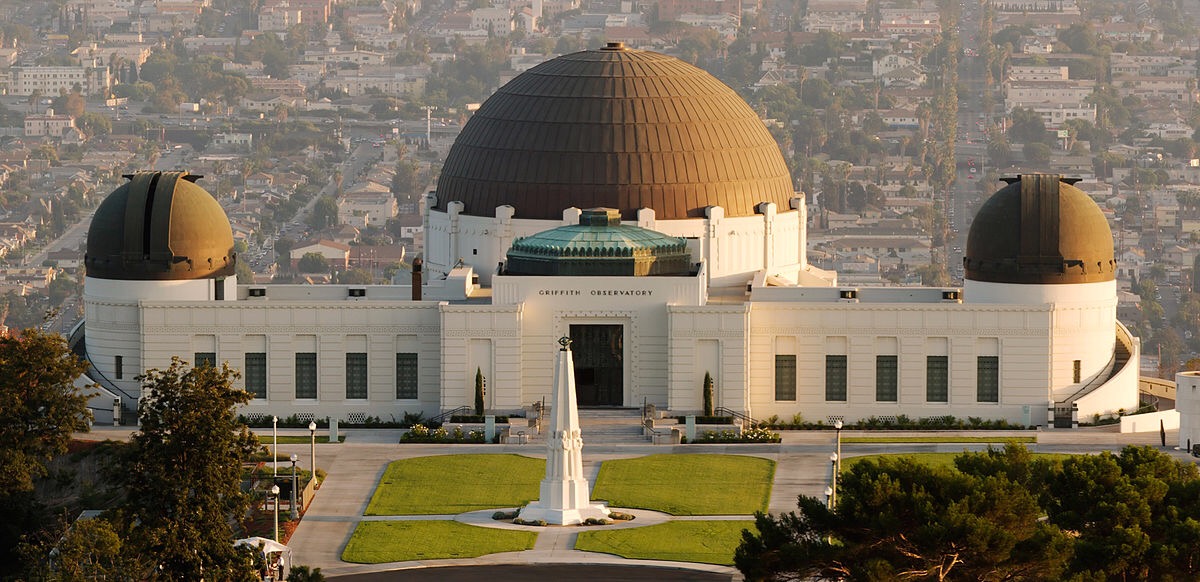
Griffith Observatory is a very iconic and historic landmark for Los Angeles. If there is a post card that shows popular city sights, then chances are you will see a picture of the Observatory along with the Hollywood Sign.
As such, the place is very popular for locals and tourists alike, and even on the most tame of days, you will always see large crowds of people. This post will help you plan ahead on when would be a good day to visit – coming straight from an employee who happens to be the author of the article!
Read on below for frequently asked questions as well.
Please… Plan Ahead
Many visitors, both local and tourists from all over the planet, underestimate how popular the landmark is for the City of Los Angeles. And because if its location within Griffith Park, how difficult that visiting can be when it’s unscheduled and poorly planned. As Los Angeles itself is populated by millions of people, the Interstate 5, US 101, and CA 134 freeways nearby are often congested, and the main roads including Los Feliz Blvd, Vermont Ave, and Western Ave that lead you up to the park entrance to the Observatory are often slow treks, especially during rush hour and/or if there is a concert at the nearby Greek Theater.
I can’t tell you how many visitors over the years I’ve encountered who get upset because they arrived too late to see any shows or after the telescopes have already been closed for the evening.
Before You Visit, Make Sure the Building is Open!
The building – which includes the interior floors and the roof access, is open six days a week, from Tuesday through Sunday. On weekdays it is open from 12pm-10pm, and on weekends is open from 10am-10pm.
The building is closed to the public on Mondays.
If you happen to be visiting any time the building is closed but the park is still open, then one can still enjoy the views of the city and the nearby Hollywood sign from the grounds. As an employee, I can tell you that It’s usually very calm and peaceful during the early morning hours.
The building is also usually closed on certain major holidays such as Thanksgiving and Christmas Day. On other major holidays like July 4 the building closes early.
You should always check with the Observatory website and/or follow their social accounts, as there will usually be warnings in advance if the building, the outside grounds, or even the entire park is closed to public access. Sometimes the closure is due to a filming, other times it’s severe weather and heavy rains that can cause closures. But they will always try to warn in advance.
Keep This In Mind – It’s ALWAYS CROWDED!
Visitors often remark to me how crowded the place gets, and that’s because the Observatory is a very popular destination. On average, it gets 1.5 million visitors a year, which is still a few thousand visitors each day, and that doesn’t include the people who just come up to the lawn and don’t enter the building!
When is it MOST crowded?
- Fridays, Saturdays, and Sundays
- Major Holidays and Major Holiday Weekends
- Some holidays the building is open, other holidays the building closes early or all day, but people may still crowd the park.
- Any days during “Peak Tourist Season” Between May through the beginning of September, when the days are longest and warmest.
- The final two weeks revolving around the December holidays including Christmas and New Years *(more about that below)*
- If there is a concert at the nearby Greek Theater – It adds to the congestion getting in and out of the park and makes parking even more difficult *(more info on that below).*
- Early Afternoons around Rush Hour before Sunset.
- A lot of people want to catch the Sunset and enjoy the view.
- If the weather is good and pleasant.
- If there happens to be an advertised celestial event (eclipses, comets, planetary “alignments,” conjunctions, oppositions, etc…), even if that celestial event won’t be visible or impressive.
So as you can see, there are a lot of factors at play that happen at any time.
On the most crowded days, as a telescope demonstrator, these are when we see the longest lines, which can lead to early closure for the telescope queues. The Planetarium shows can also sell out.
So when is it LEAST crowded?
- Weekdays – Tuesday, Wednesday, and Thursday
- During the Autumn and Winter months when the days are shorter and cooler *(except around Christmas and New Years – more on that below)*
- any time there is poor weather (clouds, drizzle, rain)
- Please note: If the weather is too harsh, such as an intense tropical storm, then the entire building and park may be closed for safety concerns.
- Whenever the Dodgers are in the World Series
After Labor Day weekend, I usually see a sharp dip in attendance. On these nights, when I am operating one of the portable telescopes outside the building for patrons on the lawn, I get almost no lines, to the point where I can easily cycle through and show multiple objects because it’s the same few people returning for more.
So I have given you a general rule of thumb to follow if you want to pick a night that is more likely going to result in a very peaceful visit, versus risking a stress inducing congestion nightmare.
Parking Can Be A Chore If Too Crowded!
I cannot stress enough how frustrating the parking situation can be, even for staff!
Pretty much every negative Yelp or TripAdvisor review will be someone who gave up trying to visit due to the traffic and parking situation. Other times people will leave positive reviews but still remark on how bad the parking was.
You need to remember that the building is on a hillside overlooking the city with ravines on two sides… and while there are two entrances into the Park from Los Feliz Blvd, they converge to a single narrow one way road that loops at the top in front of the building grounds – so congestion will occur due to the bottlenecking when there are too many cars.
Bottom line is, when it gets too crowded, traffic control is told not let vehicles all the way up top except for buses, rideshares/taxis, handicap, and staff members – frustrating to all the eager tourists who can’t find a parking spot.
Also keep in mind that the traffic levels fluctuate, and some drivers may be waved and told to park along the lower parts of Western Canyon Rd (or be told to head to the Greek Theater), only for the lots to open up minutes later for the next wave of cars to take the empty spots.
So please… Try to plan your visit for a time when parking won’t be such a chore (such as not around rush hour!). Otherwise, you will experience traffic and congestion. And if you do experience congestion, be nice to the traffic and parking attendants. They’re only doing their job!
Keep reading on to find alternatives that will make your parking and visit much easier!
The Building Is Still Free, But Parking Isn’t Near The Top.
As per Griffith J. Griffith’s will, the building itself, the exhibits, and viewing through telescopes is still FREE (minus the planetarium shows, cafe, and gift shop)!
But…
Fairly recently, the city installed paid parking meters in the parking lot up top and along W Observatory Road, even if you try parallel parking further down along the western road if you came up from Ferndel Dr/ Western Canyon Rd. I’ve seen the rates as low as $4/hour during the “off season” and as high as $12/hour during peak tourist season. This is done to combat the congestion near the top and to keep cars moving.
Remember that it’s a one way road, and if you do make your way up top but can’t find a spot, DO NOT try to park along the east road when you go downhill. Those coned off spaces may look like they are free spots but they are in fact for STAFF ONLY (or those with a permit). There are signs posted along that road that state this but people still don’t pay attention, and I have seen cars get ticketed.
Don’t Want to Pay For Parking? Use These Alternatives!
The Observatory knows the parking situation is hectic and frustrating. Thankfully there are plenty of other ways to visit, and they can save you lots of money in the process!
- When The Greek Theater nearby is not in use, their larger parking lot is free, and the DASH picks up passengers by the Greek. Always check the Greek Theater concert schedule, and try to visit on a day when there is no concert.
- If there is a concert, then the parking by the Greek Theater lots cost money and only accept cash. If you still plan on spending many hours at the observatory, this option can still save you a few bucks versus using the parking meters near the top.
- Uber, Lyft, Taxi’s, and other Rideshare services will be able take you to the top. They are busy at this location, so finding a ride for your return trip shouldn’t be a problem.
- The DASH (Downtown Area Short Hop) Bus Service has a special “Observatory Route” that begins and ends at the Vermont/Sunset Red Line Metro Station, and usually drops people off at the Observatory every 20-30 minutes.
- DON’T try parking at the Barnsdall Square Shopping Plaza which is across the street from the Vermont/Sunset DASH stop. Reportedly, they are looking to tow away cars if people leave their lots, and even worse, there exist horror stories of shady business owners towing cars even if you’re spending money there!
- There is free parking near the bottom by Ferndel Dr/ Western Canyon Road – but the lot closes after sunset. Park here if you don’t mind the hike.
Advisory – DON’T Try to Visit During the December Holidays
Do not assume that “everyone will stay home for the holidays.” You need to realize that almost everyone is on vacation from mid December through New Years, and has the same idea you have. You have to think of Griffith Observatory in the same vein as places like Disneyland and Universal Studios.
The place gets PACKED… like STUPID PACKED! It gets so crowded that entrances have to be closed off at times because sections of the building get full.
Also… Imagine taking almost an hour to drive up from Los Feliz Blvd up to the entrance of Griffith Park, only for you to be directed away because every parking lot, including the Greek, is full. The congestion as a result makes it difficult for the DASH and even staff members to go through…
Once again my advice for visiting during the December holidays…. DON’T!
Please plan your visit for another time… you have been warned!
Advisory – July 4 is NOT Recommended Either!
There have been recent efforts since July 2023 to discourage large swaths ofpeople from coming up and crowding the park, such as closing the building early (hence no roof access), and closing off sections of the grounds that overlook the city. Please… go enjoy fireworks elsewhere. Fireworks are a hazard to the park during the dry summer months anyway, and all it takes is one bad spark or ember…
DO NOT Bring Your Drones!
Per city ordinance, the observatory, and all of L.A. city parks are “No-Drone Zones.” If a park ranger catches you, you will be cited or even arrested! As soon as one is spotted, rangers are contacted over the radio, and an effort will be made to search for the drone operator.
Leave Your Cigarettes or E-Cigs In the Car! (And no open flames!)
As the entire Griffith Park is a no smoking zone, smoking is strictly prohibited inside and outside the building, on the lawn, and in the parking lots! No, you can’t vape either!
This is especially critical because of the fire danger in Griffith Park during the dry months, and believe me, we’ve had some close calls! If a ranger catches you, the fines are steep!
Speaking of open flames… were you hoping to setup a peaceful candlelit picnic on the grassy knoll? Think again – open flames such as from candles and lighters are not allowed.
Remember, There’s THREE Floors (And a Roof)! Stay a while!
Many tourists visit the building and go inside the main historic floor, yet don’t bother to check out the other two floors below – making the bottom two levels feel empty in comparison. There are also restrooms on each floor, so if you think the top floor restrooms have long queues, head downstairs!
Also, don’t miss out on the Leonard Nimoy Event Horizon Theater, more exhibits, the cafe, and gift shop down below!
The roof is also open to the public as long as the stairs are deemed dry enough for safety reasons. While the historic Zeiss refracting telescope dome to the east does open to the public, the Coelostat solar telescope dome to the west does not.
The Weather Is Like A Roulette Wheel. We do not always have clear skies!
It is disappointing when the sky is overcast (thus no telescope viewing), and tourists often ask, “well when is it usually clear?” Well, Los Angeles usually has an average of 284 sunny days per year… the winter months or “wet season” from October through March are more prone to overcast skies than the “dry season.”
While the Los Angeles “dry season” is from April to October, we still have odd weather patterns. “May Gray/June Gloom” occurs in the late spring to early summer weeks and frequently brings overcast foggy skies at night over L.A. And then during the so called “wet season,” the Santa Ana Winds bring high pressure systems and dry weather, often making it too windy for us to operate our telescopes!
Just check your daily weather forecasts! I know it’s heartbreaking when the one day you can visit ends up cloudy or rainy, but we can’t do anything about it!

The Observatory does NIGHTLY telescope viewing… not once a month!
AS LONG AS THE WEATHER PERMITS… ALL TELESCOPES ARE FREE TO VIEW, and are operated by knowledgeable employees. Between the hours of 7:00 pm – 9:30 pm, you can get in line for the historic Zeiss Telescope, and/or check out the portable telescopes set up outside at various locations on the front lawn. The line for the Zeiss dome is always going to be longer, but the portable 11″ Schmidt Cassegrains on the lawn are actually capable of the same views as the 12″ Zeiss – and the lines are shorter!
On the days where it is overcast and viewing celestial objects is not possible, as long as there is no precipitation and the roof remains dry, the historic Zeiss telescope may be open as an exhibit where the telescope operator of the evening will do presentations and answer any questions coming their way.
After 9:00 pm, Museum staff on the roof will warn those waiting in line outside the dome that once 9:30 pm hits, the doors to the Zeiss dome close, and you will not be allowed in. Telescope lines on the lawn also close around this time and WILL NOT accept any more patrons into the queues.
When I work the lawn telescopes, and it’s closing time, I’ll still accommodate and engage with the remaining patrons who made it to the line before closing time. But to those who didn’t make it by closing time, I’ll be as uninviting as possible, like closing off my stanchion tape, and using my tablet screen to show a bright glowing red “CLOSED” notice.
Please do not ask the telescope demonstrators if they can squeeze in one more viewer… it’s not fair to everyone else who was already turned away. It’s not the staff’s fault the patron didn’t plan their visit better.
“Oh… but we came all the way from {out of town/ another state/ another country}…”
Sorry, we’ve heard it all – and the telescope staff will get in trouble if the telescopes are not put away before the building closes!

BE ADVISED – SOMETIMES THE TELESCOPE LINES CAN CLOSE EARLY
This is more talking about the telescopes like the one pictured above that are stationed out in the lawn. While 9:30 pm is the advertised time as said on this article, and observatory website, and by staff upon asked; there have been times I have had to close my telescope line much earlier than expected.
All of the portable telescopes need to close down, and be put away by a certain time before the building and park closes to the public. As such, it is the individual operator’s discretion to get a sense for how long their line is, and estimate if the last person presently in line will be viewing before the cut off time. So if I am working, and I see my line is extended far beyond the cut off point after 9:00 pm, then I WILL close the queue early, sometimes by as much as 15-30 minutes early.
The other factor can be weather… if the clouds get too thick, the wind gets too harsh, or if an imminent rain shower is approaching, then the telescopes will close down early as well.
The Observatory and Griffith Park has strict rules about closing procedures, as….
Closing Time Means CLOSING TIME!
This is not a place that allows people to stay inside and explore after closing time. PA systems will often announce that closing time is approaching, and once 10 pm hits, staff WILL force you to leave. Rangers will be making sure people outside are making their way either back to their cars, or out of the park.
BE ADVISED – For those who use Rideshares, Taxi’s, or the DASH to come up… the final DASH bus often leaves BEFORE the park is set to close, not AT closing time. Rangers will be telling visitors that there will be no more taxi’s or rideshare services coming up after a certain… so if you did use public transportation and rideshares to get up, be sure to leave before such means becomes unavailable to get down the hill, or you will have to walk all the way down the hill to outside the park where they can pick you up.
The entire park closes at 10 pm, and nobody is allowed to wander the grounds after closing! Please… do not try to visit or stay after hours! The only people allowed to stay after hours are those who are authorized. People can start entering the park again once 5am strikes.
I hope this helps you figure out a day for you to come visit!
Frequently Asked Questions
Let’s Start With Questions That Deserve One Word Answers:
Do you think the moon landings were faked? No
Can you see the American Flag on the Moon with the Telescope? No
Do you or anyone at the observatory think the Earth is flat? No
Have you personally seen any Aliens/UFO’s? No
Do you think aliens exist? Yes
Do you believe in astrology and horoscopes? No
Can’t your telescope shine though clouds? No
I know you’re closed, but can you please let me in line? No
Please? Just one more? No
When is the next Star Party?
Despite the Observatory offering nightly telescope viewing, it seems more people have heard about the monthly star parties held by the Los Angeles Astronomical Society (LAAS) and the Sidewalk Astronomers. They usually host them on the Saturday that is closest to first quarter moon, so if you don’t know the exact date, you can check your moon phase calendar and figure that out. If there is forecast of rain or bad weather, then don’t expect them to set up!
The Observatory website, and their social media pages also do let viewers know when the next one is, as well as the LAAS website calendar.
The star party also closes around the same time as the official observatory telescopes.
How do I know what the observatory telescopes will be showing ahead of time before I visit?
There is no set schedule, and that’s because what gets shown is ultimately the operators choice. Some operators when they have a choice will chose one object over another. Other times, we do not have a choice and will show you the only object(s) we CAN observe based on the conditions of the sky and weather.
But if you really want to know what’s in the sky before you visit, there’s two ways you can do it:
- You can simply look up stargazing apps, moon phase calendars, or you can do it the old fashioned way and become a sky watcher yourself. If a planet like Jupiter, Saturn, Mars, etc… or just the moon happens to be in the sky during normal viewing hours, then one can guarantee at least one telescope showing it. But if none of those objects are options, then it’s very simple – they’re not visible!
- Another method is via the observatory website and social media platforms of your choosing. The Observatory’s Astronomical Observer releases a sky report online before each month, and previews what will be visible in the sky in the upcoming days in both the evening (telescope viewing hours) and the morning.
Who or What determines what objects you’ll be showing?
First Factor – What is available in the sky on the night(s) you visit.
Second Factor – The Weather Conditions, Time, and Lighting Conditions (i.e. is it still daytime or is it dark outside yet).
Third Factor – It’s the Telescope Demonstrator’s Discretion on what he/she chooses to showcase.
As a telescope demonstrator, I am always trying to pick the objects that look the most impressive that might inspire. But the sky does not always offer what everyone wants to see, such as the planets or the moon. More times than not, visitors hoping to see a respective object are told “sorry, wrong day (or wrong season). we will show that object on {the correct day or season} and would love for you to come back then.”
Very seldom are we told to point at a specific target. We do sometimes try to coordinate who is pointing to what in an attempt to add some variety for the visiting patrons. But other times, if three telescopes all happen to be pointed to the same object, the main reason is that’s ALL we can offer!
Does the Light Pollution and Haze Affect How Well You Can See?
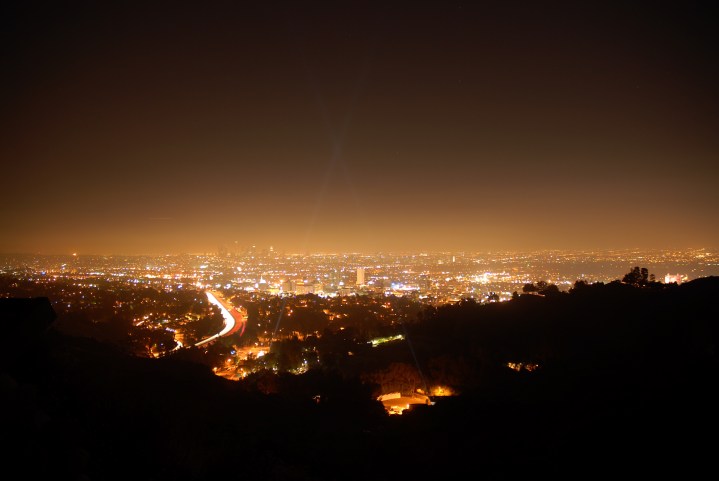
The skies above Los Angeles are very bright, and the lights severely affect our view of the stars. But if the object in question can shine through the light pollution, we can see the object just fine through the telescope. Bright stars and the solar system objects of course will look fine, but deep sky objects on the other hand are admittedly shells of their true selves with only a few bright enough to qualify as “impressive.”
What we deal with more than anything is the changing quality of the seeing conditions caused by the atmosphere and the levels of haze above Los Angeles. We can get good views as long as the air above is steady.
Has Los Angeles Always Been this Smoggy/Hazy?
Los Angeles is not as smoggy as legends say it is! I’ve worked plenty of days and nights where the view is super clear, and can see the ocean in the distance.
Scientific research, regulations, and efforts that were made starting in the 1970’s have gradually gotten the smog levels to the point where “smog alerts” are a thing of the past. While L.A. may still be listed as the worst air polluted city in the U.S.A., it’s not even close to being listed among the 500 worst air polluted cities in the world!
Believe it or not, the Los Angeles area has always been naturally hazy due to the inversion layers and onshore flows being blocked by the nearby high mountains. Spanish explorers sailing into San Pedro Bay in 1542 could see the smoke from native villages appear to flatten out from hitting an invisible ceiling. They were so impressed by the sight that they labeled the area “Baya de los Fumos,” or “Bay of the Smokes.”
We still occasionally get those bad smoggy days, but it’s usually due to wildfire smoke more than anything, and if it gets too bad we won’t even set up our telescopes!
Can You Show Me Where <insert movie, TV show> was filmed? IS this where <Insert popular music artist here> performed?
Chances are, the answer is yes. The Observatory has been used in countless pieces of media on the silver screen and television in various ways, and I cannot list all of them off the top of my head, just a few notable shows that pop into mind. It has been used as a setting for concert performances as well. And every now and then, a famous person in the astronomy or entertainment field may show up either as a guest of the Observatory itself, or just as a random tourist.
Since the Golden Age of Hollywood, it’s undeniable that many pieces of media helped expose the Observatory to the masses and attracted many to visit out of curiosity. And while the staff is there to communicate their passion for science and astronomy, we’re all fans and “nerds” too!
 ORION BEAR ASTRONOMY