

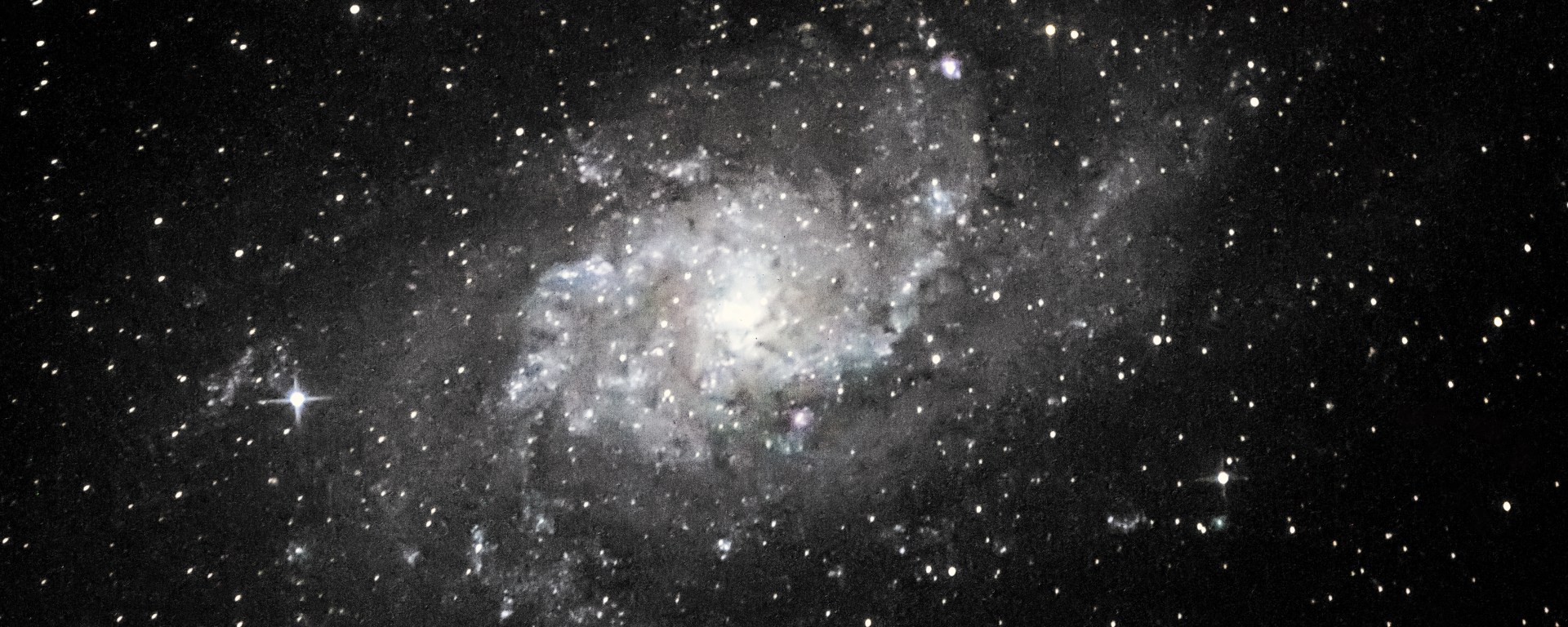
This late summer warm night was back to business after a rough night the previous month.
| Date: | September 15-16, 2023 |
| Location: | Amboy Crater, CA |
| Time | 21:00-4:00 (UTC-7) |
| Weather | Warm with high winds until 11pm; 100°- 80° F |
| Bortle Scale | 2 |
| Elevation | ~800 ft |
| Landscape | Low Desert |
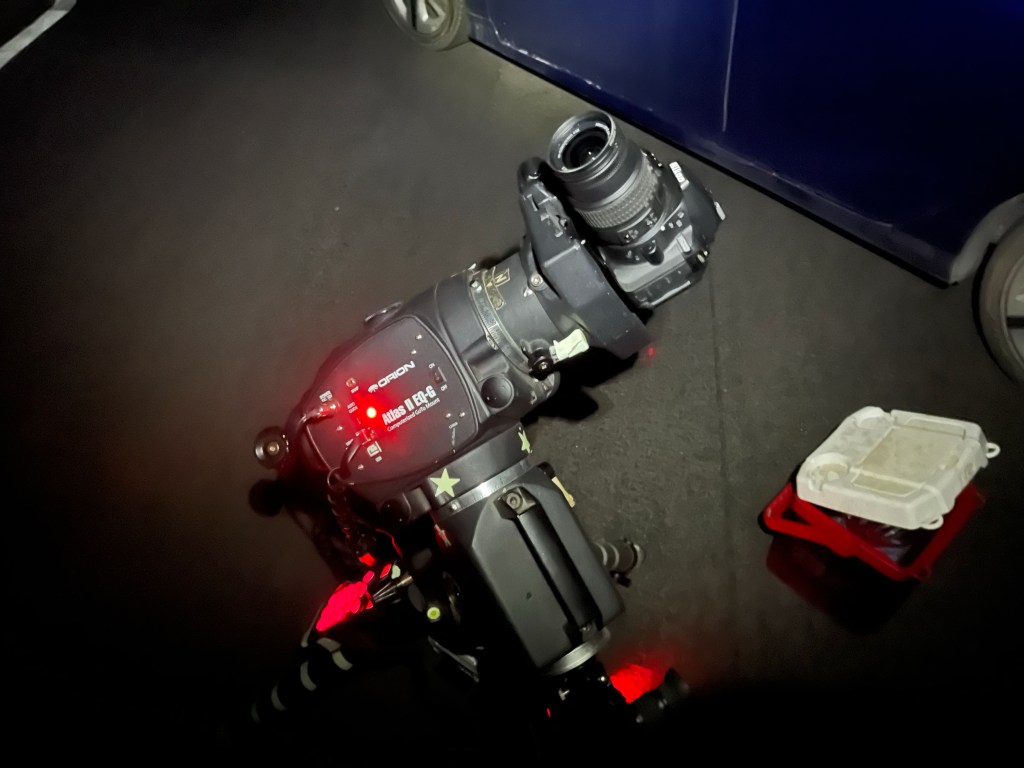
Equipment Used
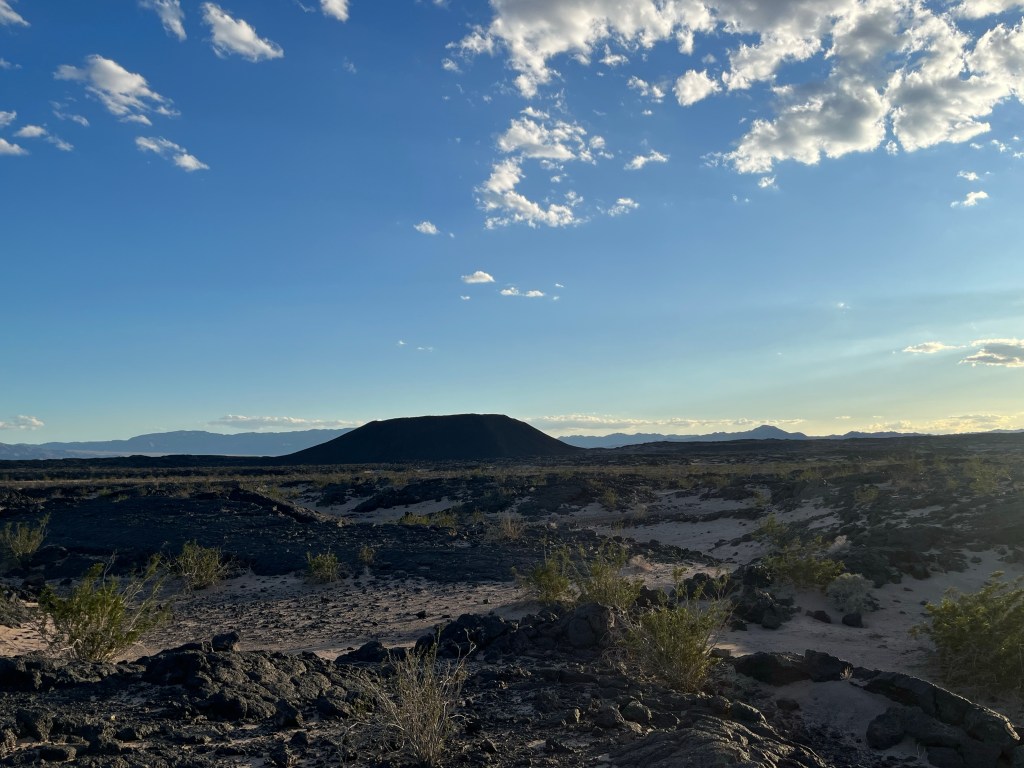
Shortly after the rough night on August 12-13, I had moved to Phelan, CA. This meant that now I was closest to Amboy (2 hours away) out of all my preferred dark sky locations. And since the weather looked promising, and I hadn’t been there in a couple of years, I decided it was time to pay a visit.

The night began with a beautiful sunset, and the leftover clouds that dissipated soon after provided an excellent addition to this sunset shot.
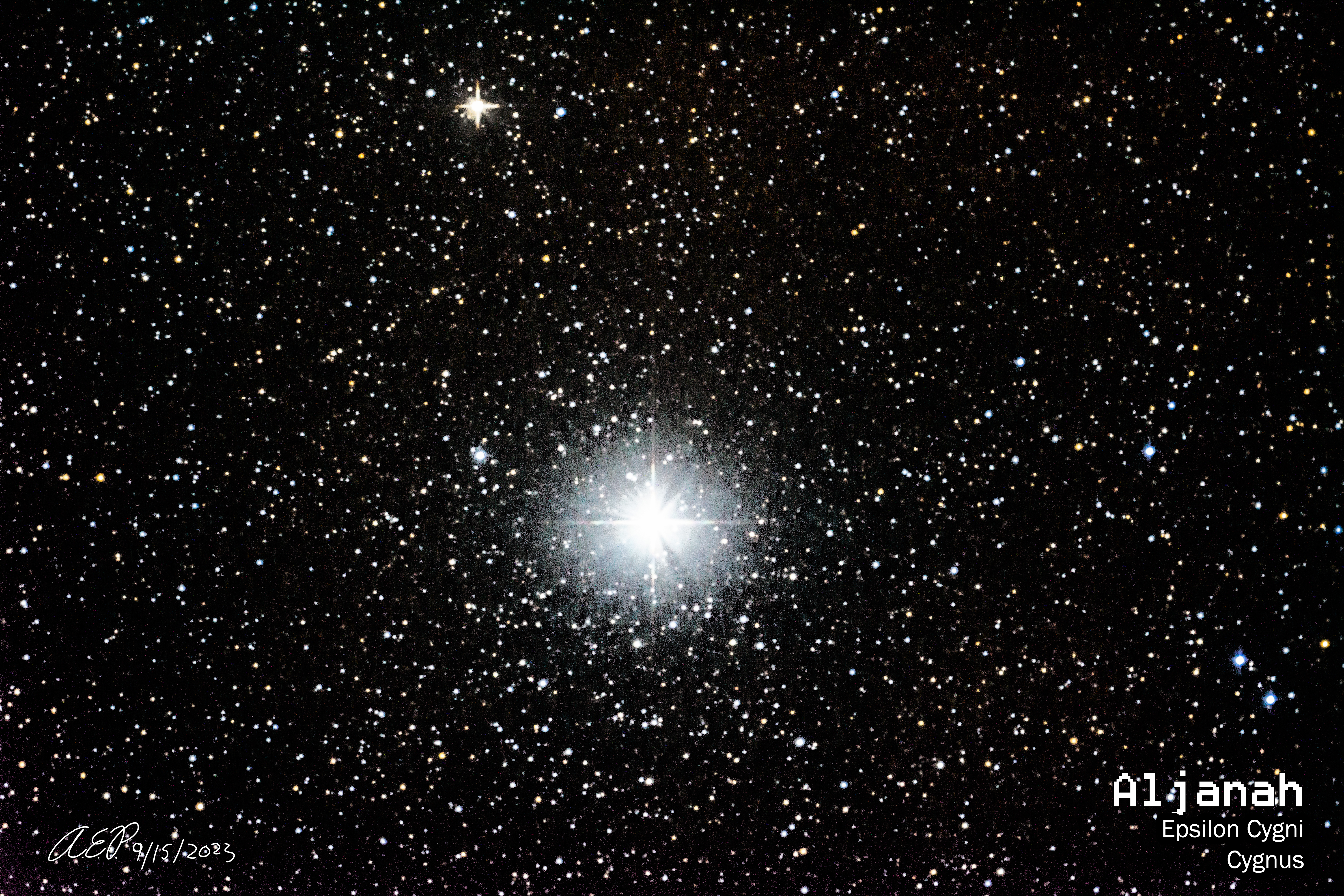
While the main app I use for stargazing weather predicted only 3-4 mph winds before calming down, instead I dealt with 10-15 mph winds for the first couple hours as it got dark. The winds were enough for the wind tube above one of the observation decks to stay vertical. Although I was able to get a couple of decent photos out of Altair and Aljanah, it became too much for the telescope and guiding to handle, thus I could not image the Deer Lick Group.

So I chose instead to switch to tracking wide angle constellation shots while the winds were too much.
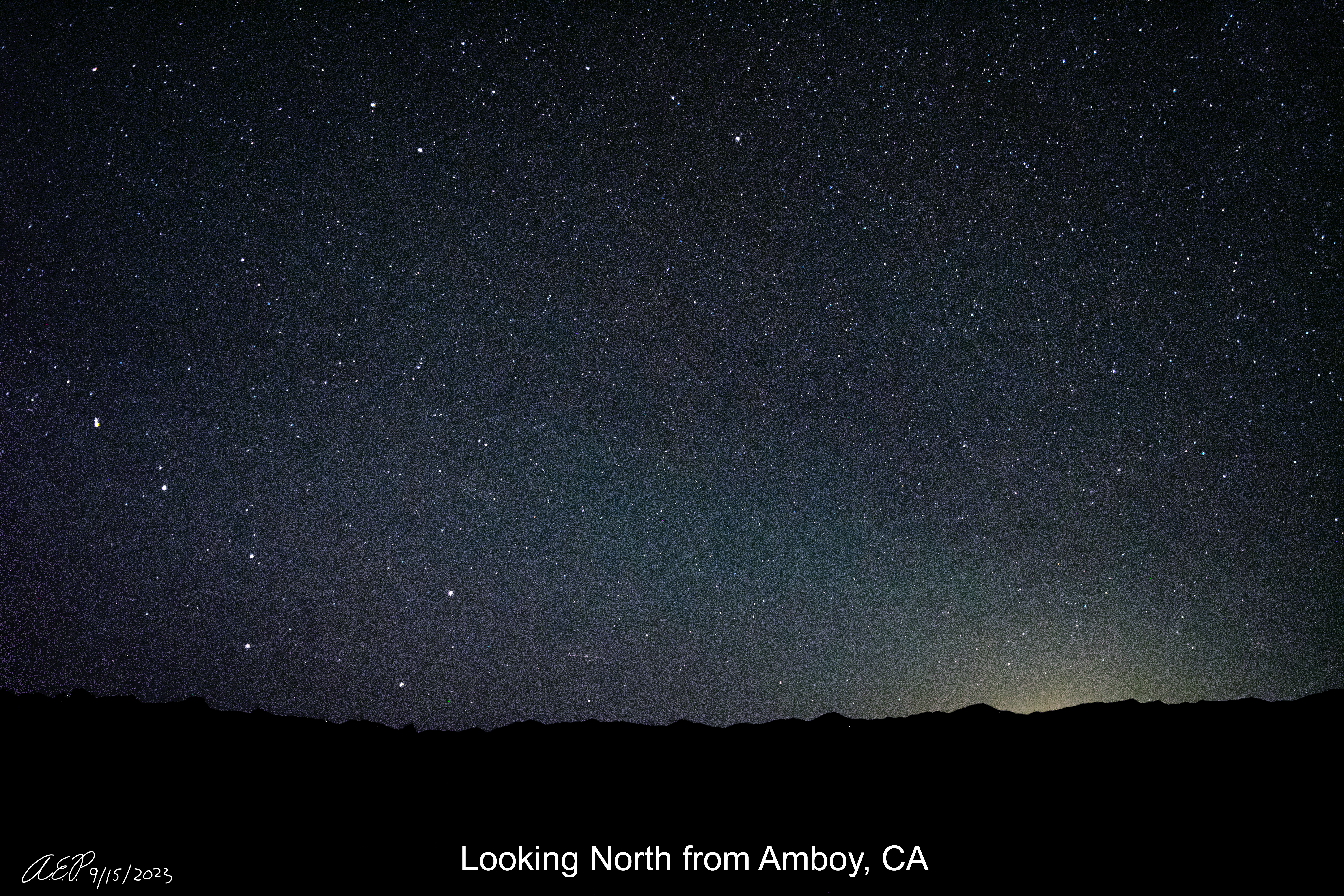
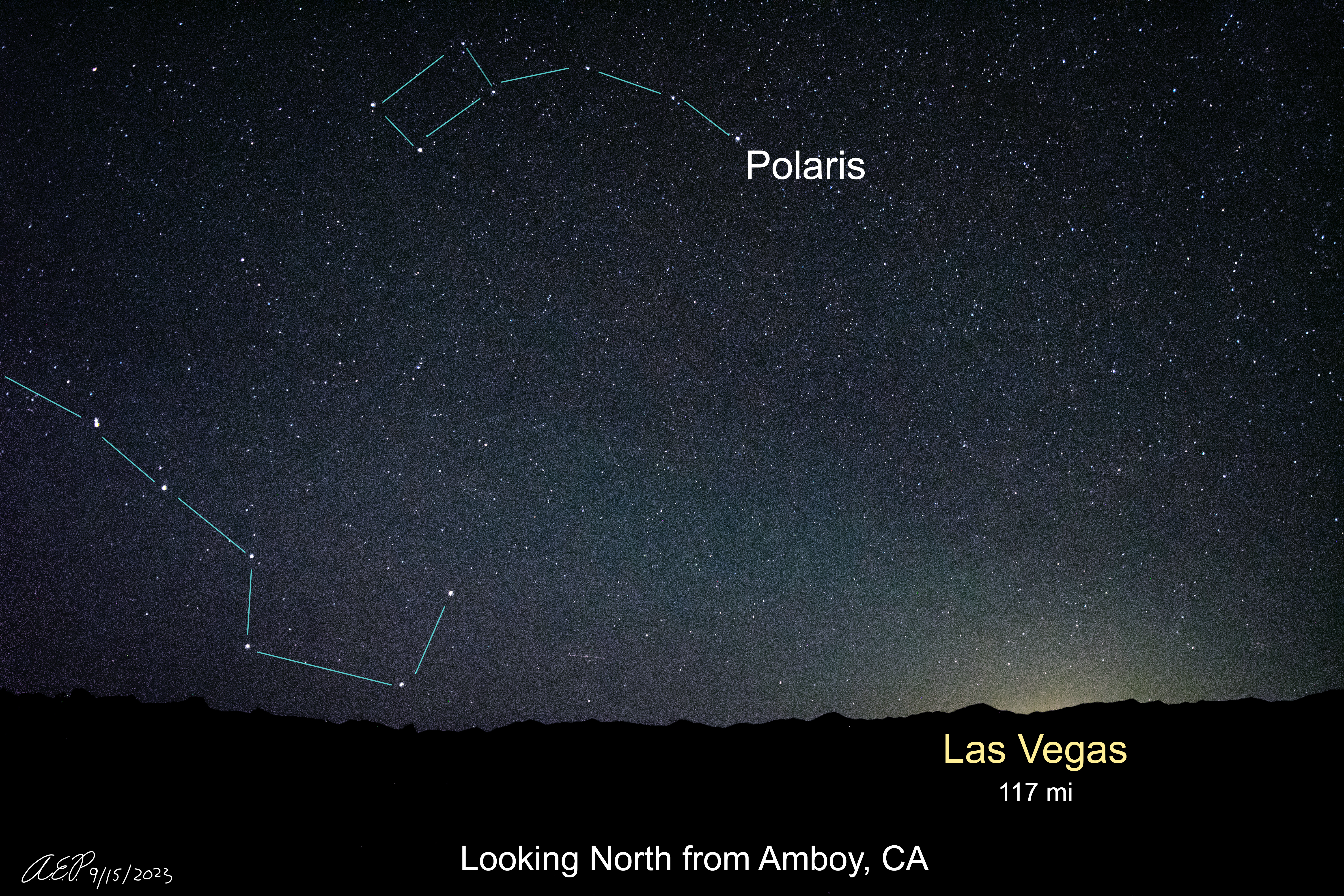
The distant glow from Las Vegas, thanks to the air being dry, wasn’t as bright as I’ve seen it before, but still present always.
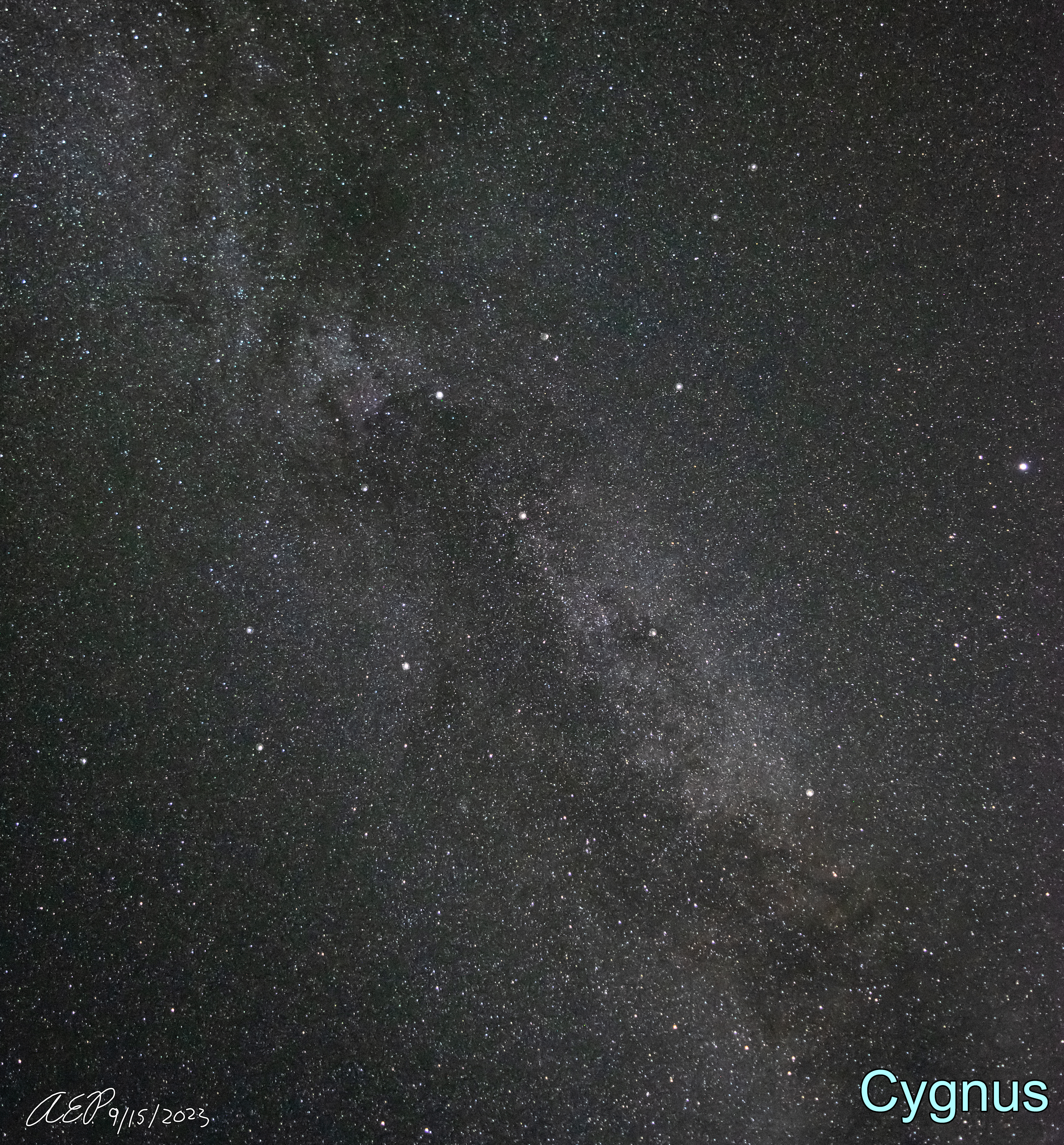
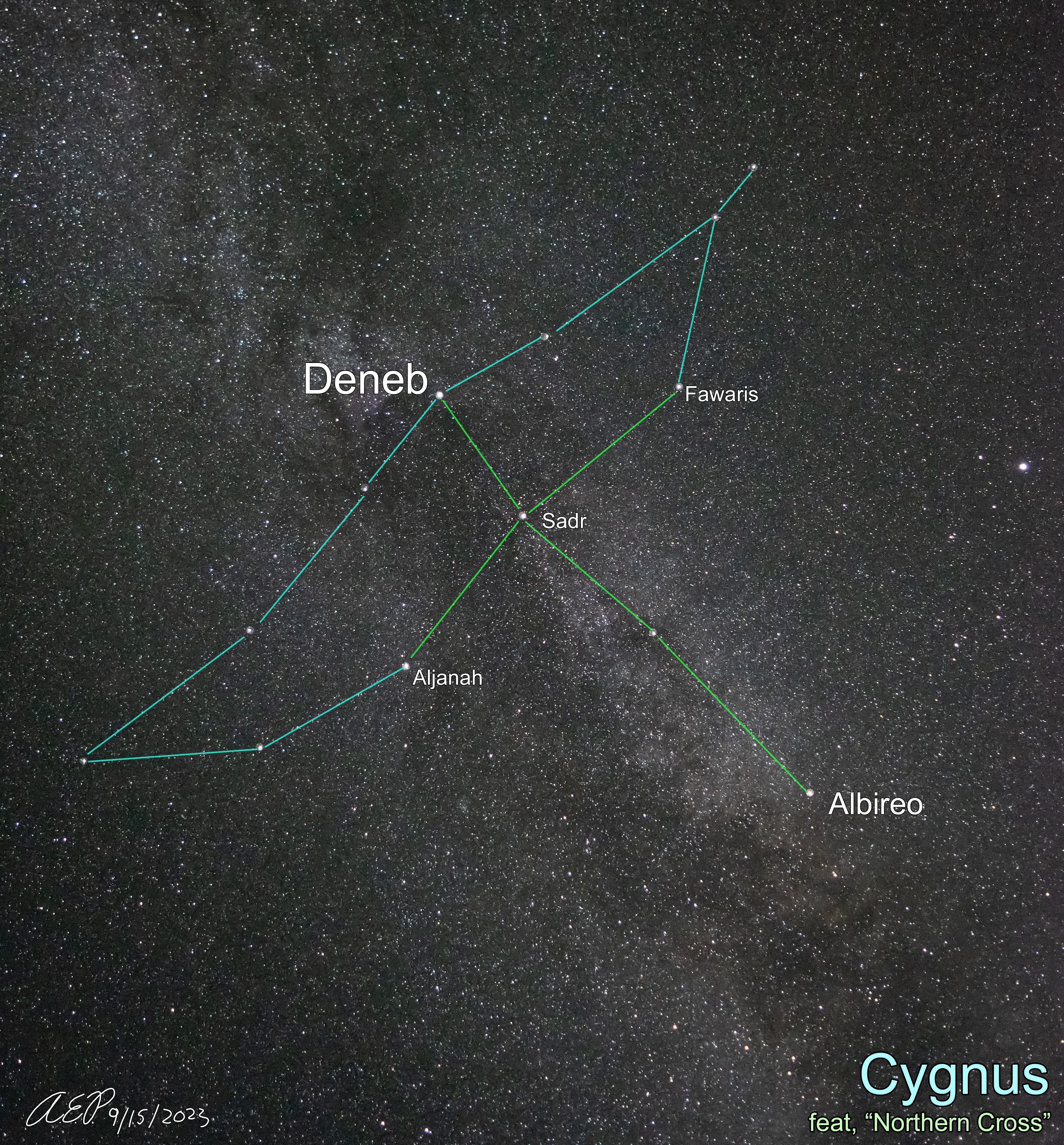
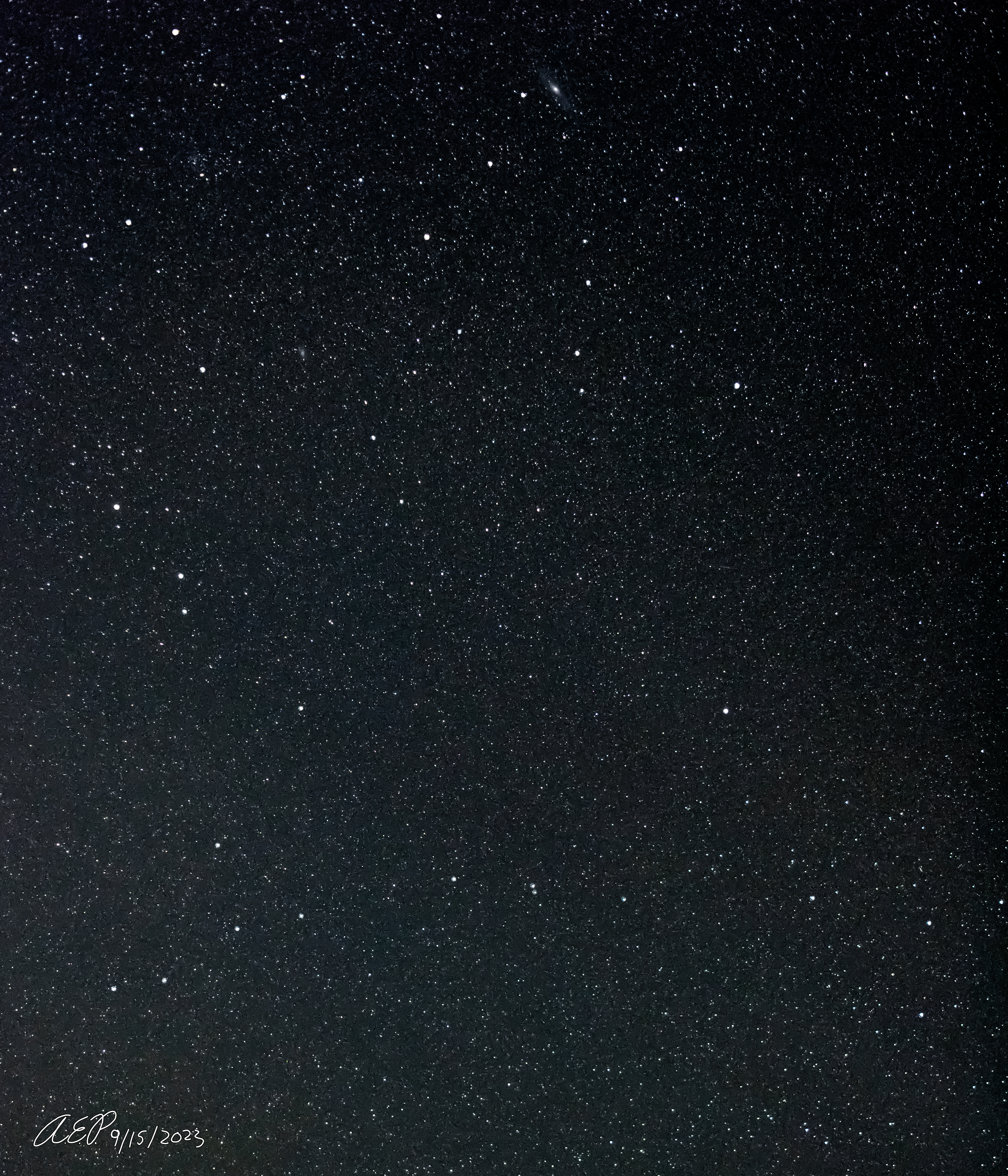
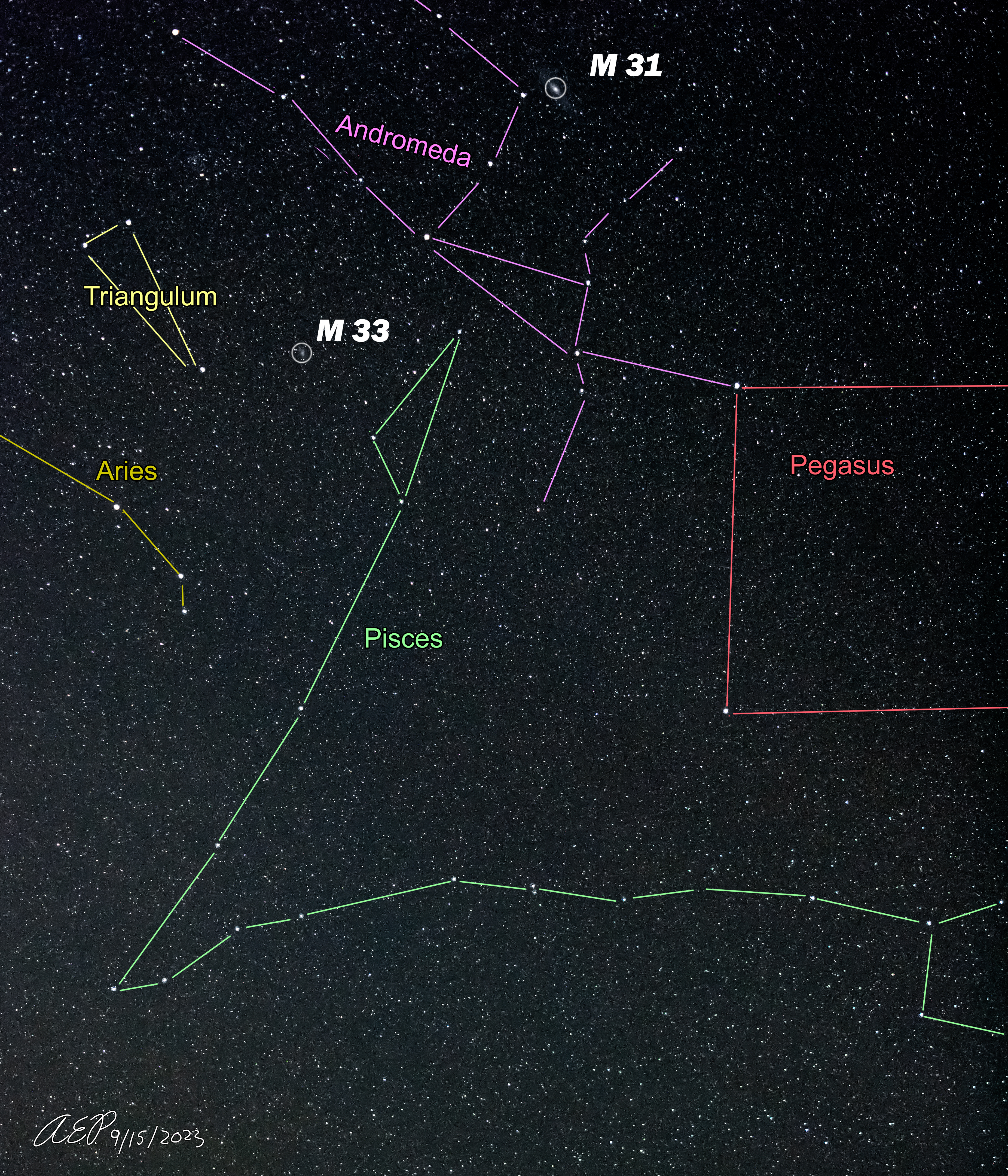
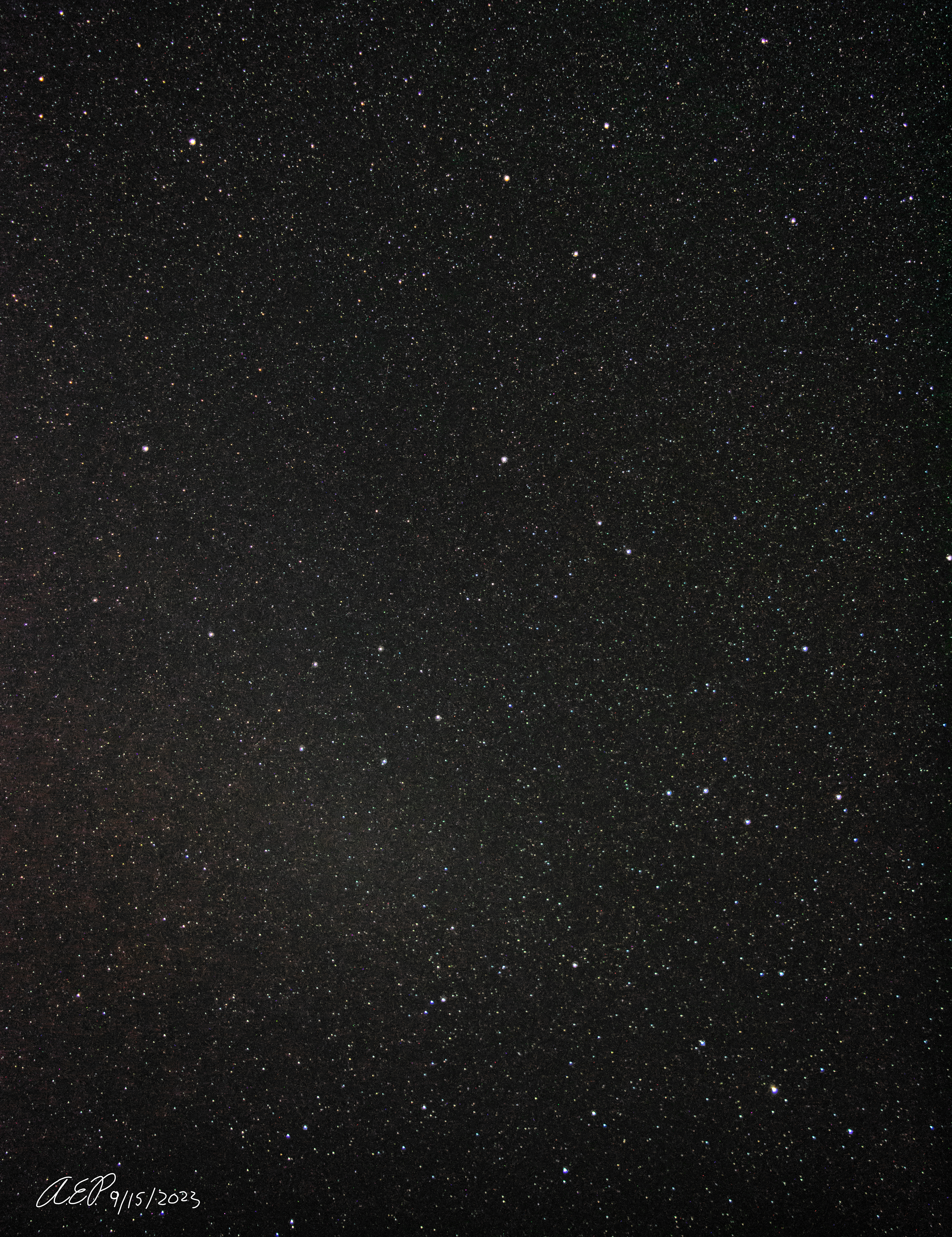
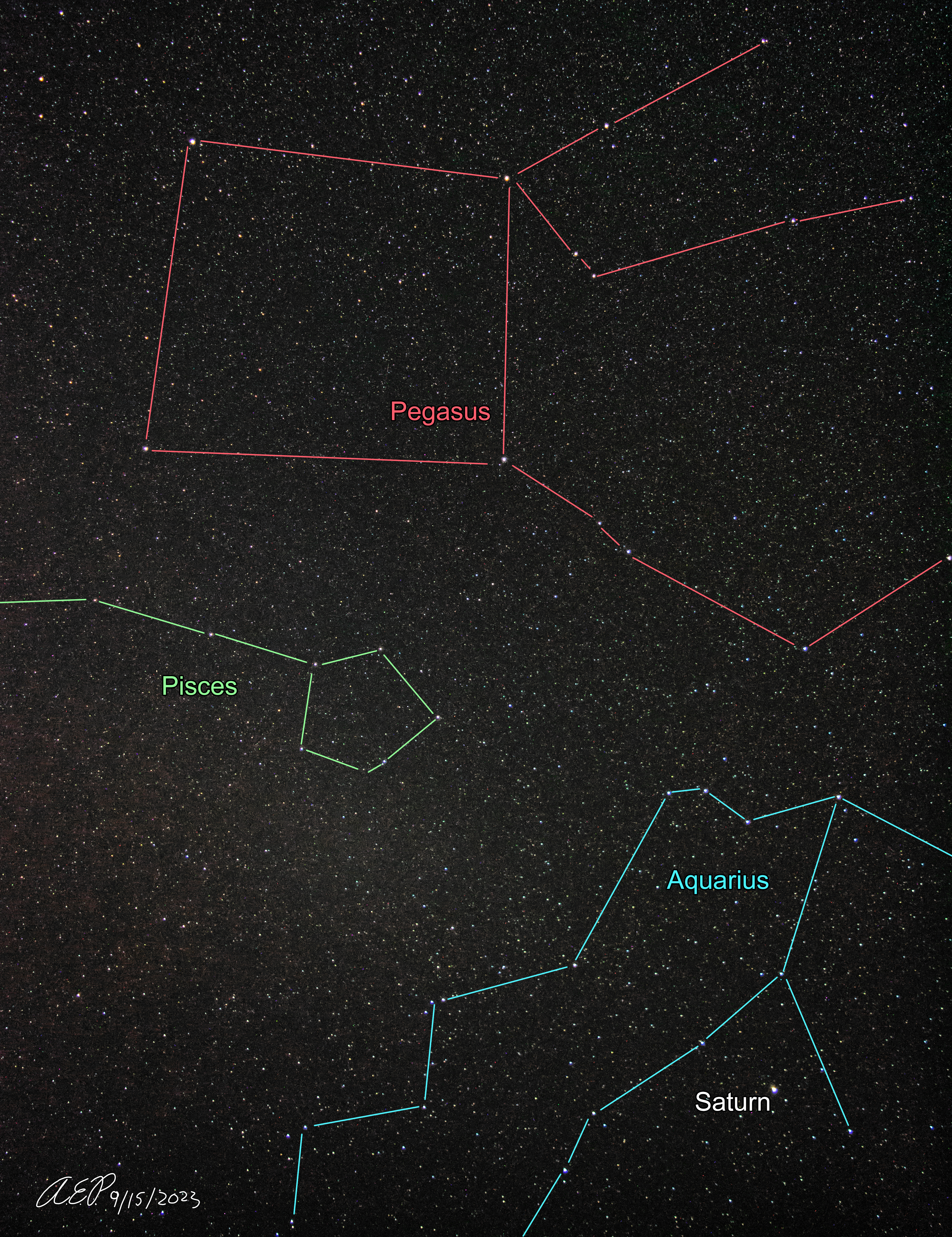
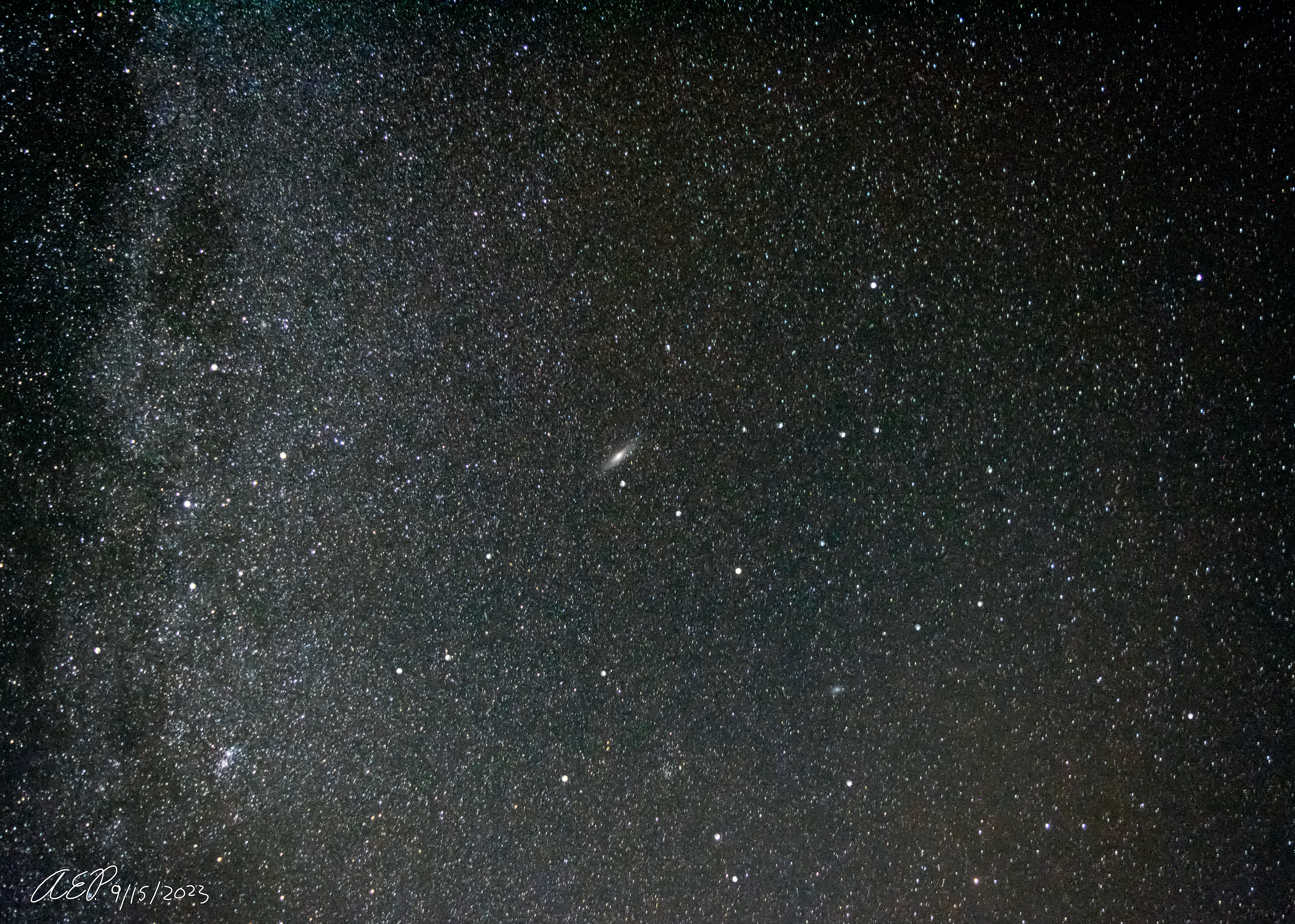

Because the night was still warm, that meant my DSLR was also warm, hence a lot more noise in the shots than I wanted – making them a little harder to process.
In each of the constellation shots above, the key stars for the featured constellations are actually selected and brightened to make it easier for the untrained eye to spot them.
After 11pm, the winds calmed down significantly, with the major downside being the temperatures remaining in the low 90s to mid 80s overnight, thus the night didn’t really cool down.
Because I had previously been working on the telescope balance, and left some key marks on the parts for placing the OTA and where the counterweights need to be, switching back to Telescope mode went by really quick and I was ready to go!
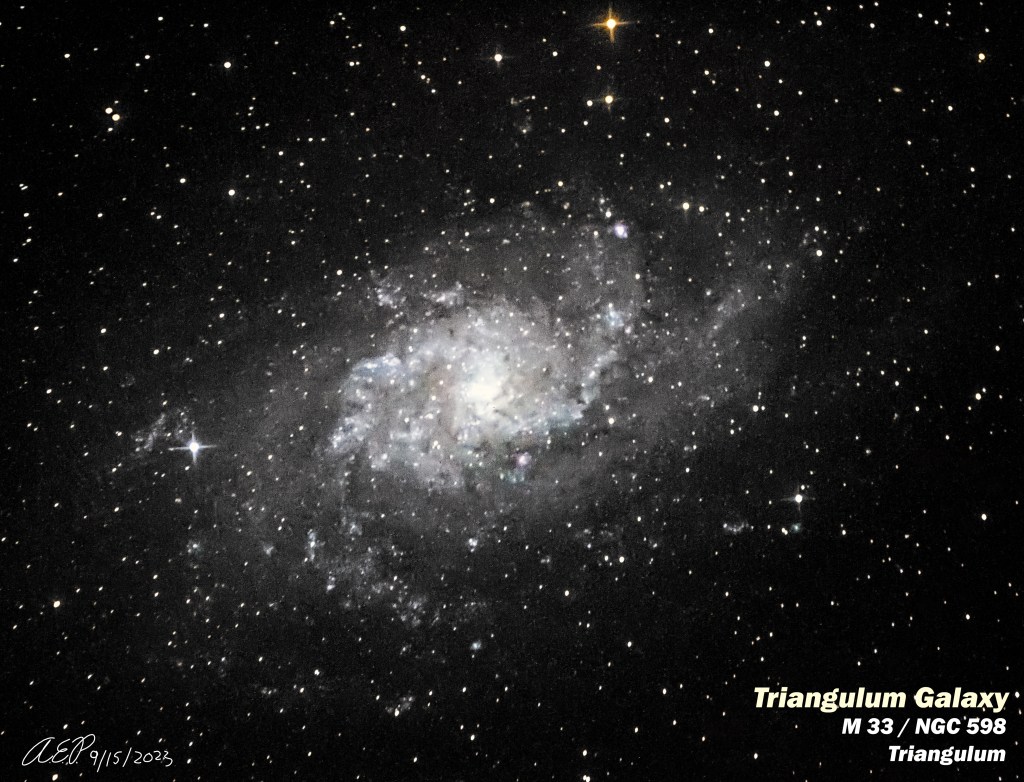
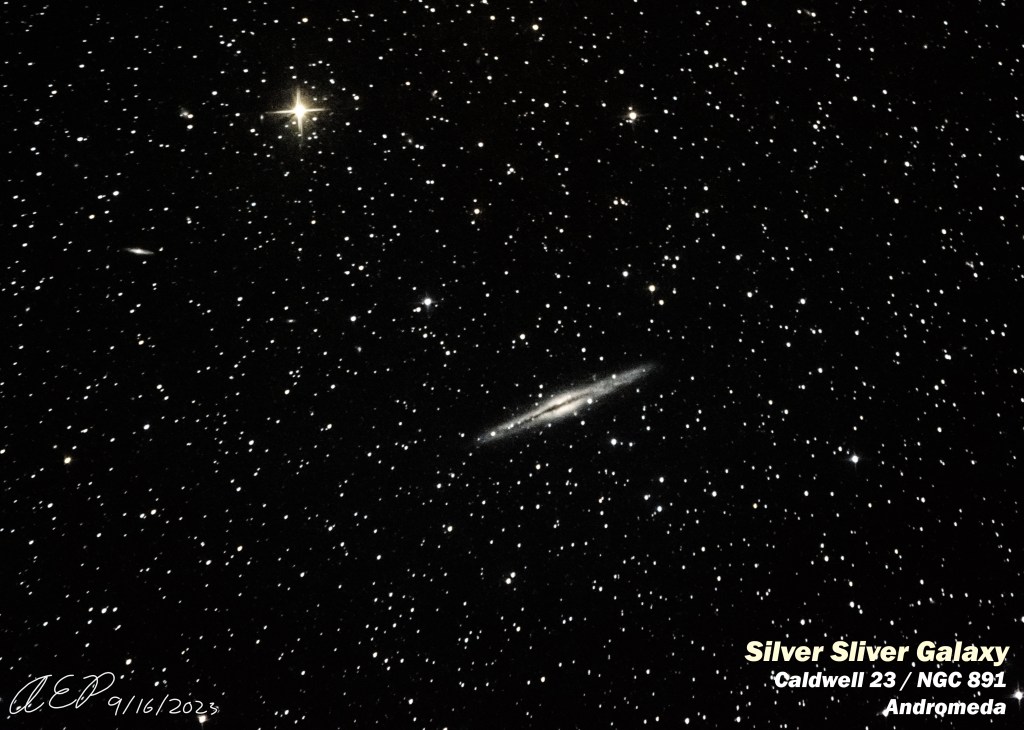
Although there is still some noticeable coma near the corners and edges (even with the use of the coma corrector), I feel this was more attributed to the camera being rotated 90 degrees to get the desired frame – and the eyepiece port essentially tilting the camera slightly when tightening it.
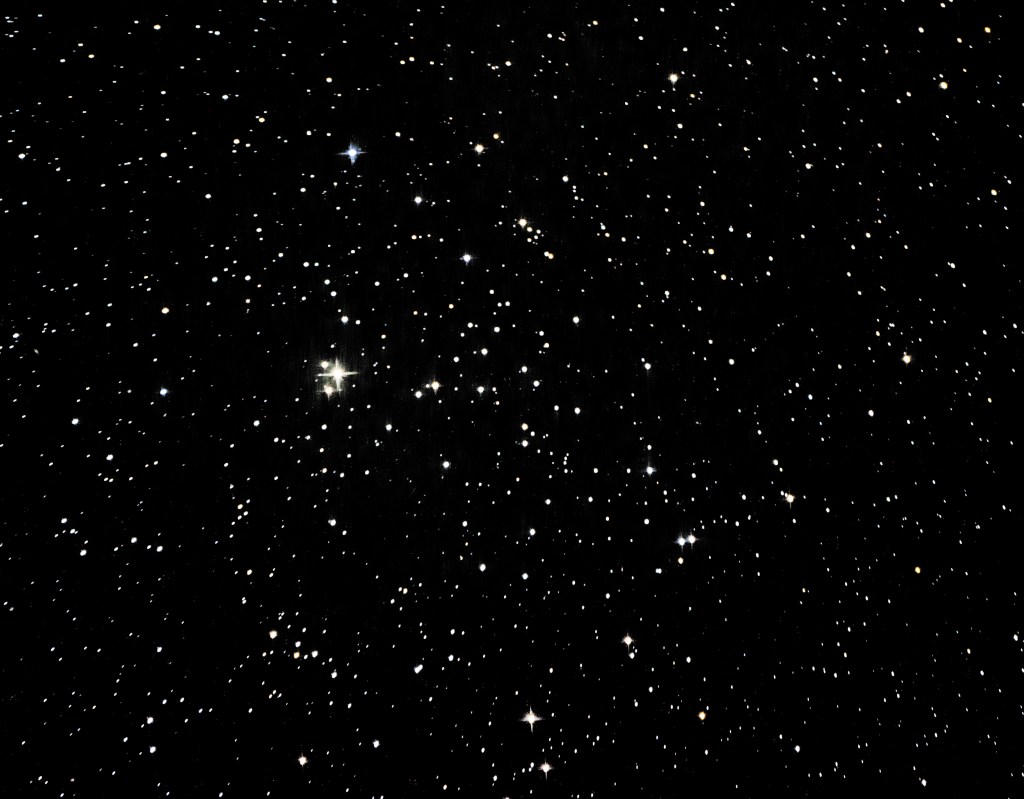
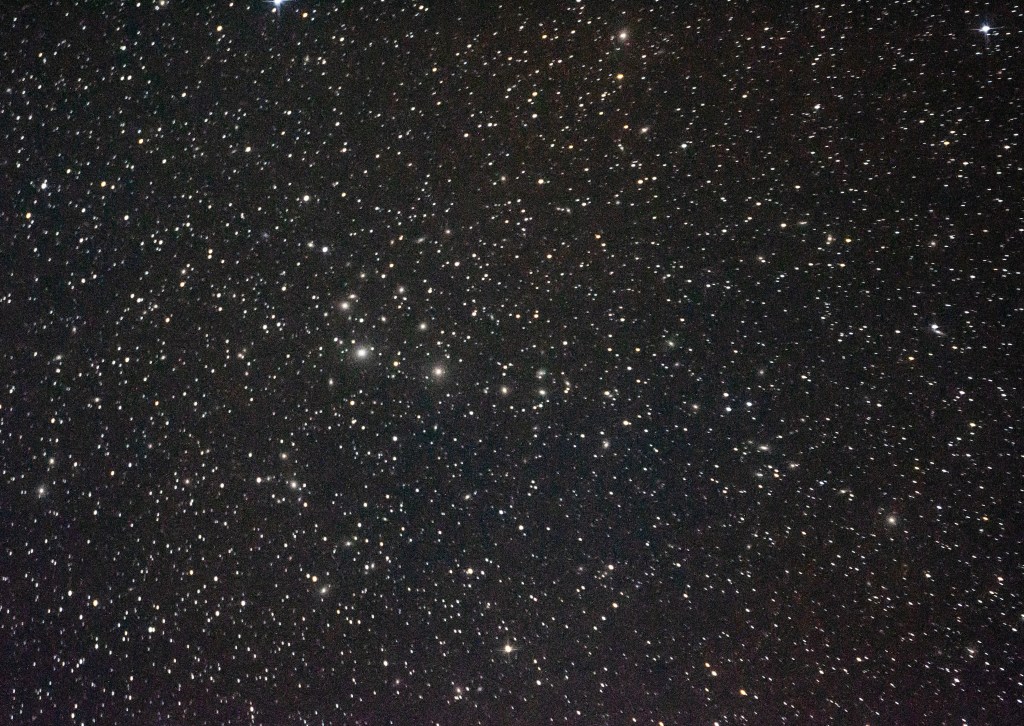
Two other objects, Caldwell 28 and Caldwell 24 (shown above respectively) were attempted, but for whatever reason or another, the guiding didn’t seem to keep the background stars as circular as I wanted, or I felt like the noise in the raw images rendered them unusable and unable for me to save in processing. Some may think they look okay but I don’t feel they make my own standards.
However, when 3am rolled around with Orion high enough in the sky, I decided to give the Horsehead Nebula another go, and after a lot of processing and noise removal, this is the result!
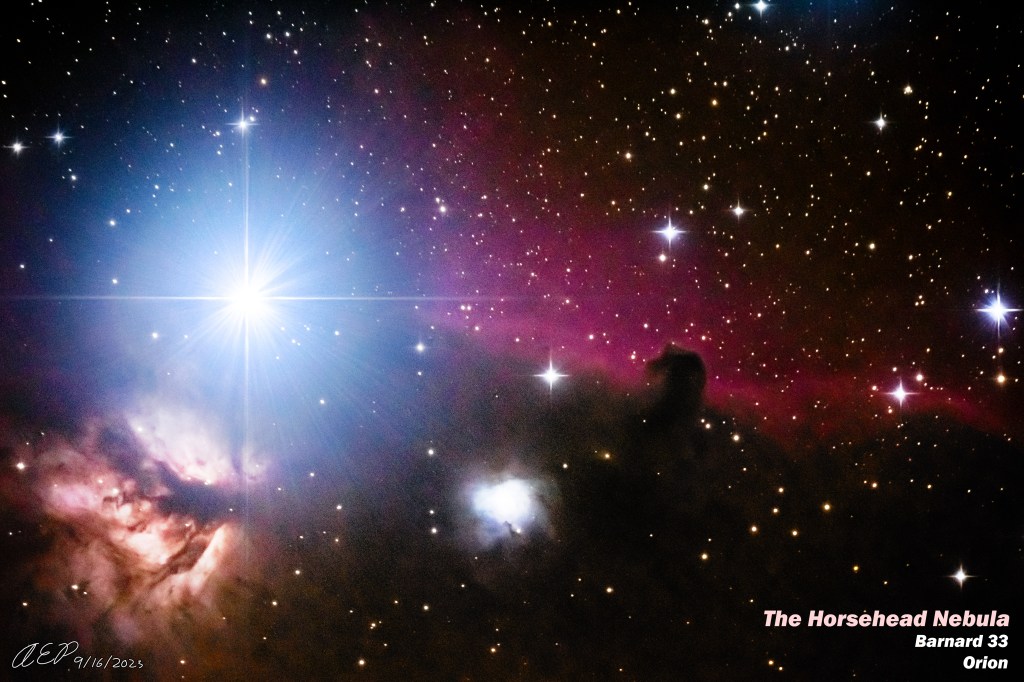
All in all, it was a productive night, but I know the day will come when I start investing in a fan cooled CCD camera for telescope deep sky imaging, which will only make my efforts get better images! In terms of my Nikon d5300, I’ve gone as far as I can go with it, and can only do so much when the nights are warm.
 ORION BEAR ASTRONOMY