

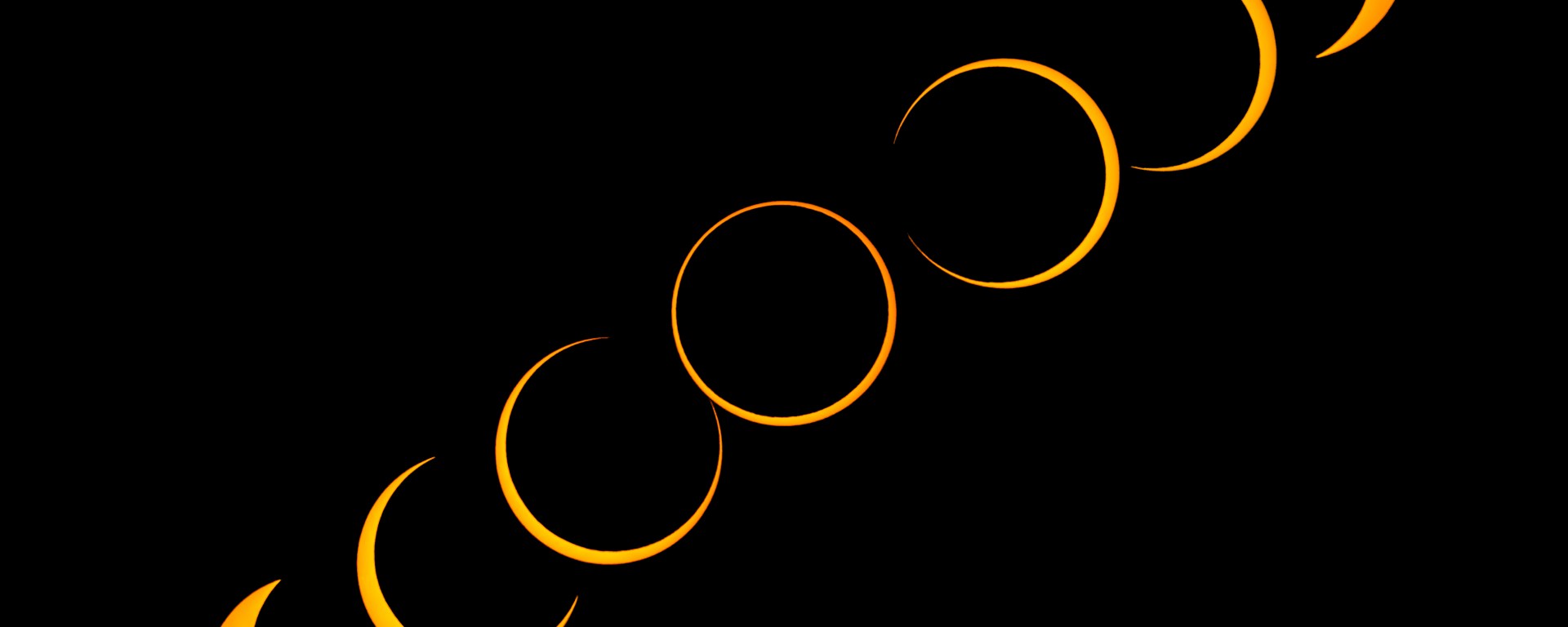
The year 2023 didn’t see as many deep sky trips due to a variety of circumstances, but when I did go out, I made sure that I made them count. The two major goals for that year were the following: 1) finish the entire Messier catalog by imaging each object associated with it, and 2), travel to within the path of annularity and image the October 14 Annular Eclipse. Both goals were achieved.
So let’s take a look back on what I feel are my best images from the year 2023.
Perseid next to the Pleiades

I’m not going to sugarcoat the experience I had that night on August 12-13, 2023 when attempting to see the Perseid Meteor Shower… it was the very definition of HELL! But at least the night ended on a positive note, and I was able to get a few decent meteor captures, and the best one was seen in the Taurus constellation, where the famous Pleiades are located.
Eagle Nebula

This one was shot with a 2X Telextender to make my 8″ Newtonian an f/10 2000mm focal length scope. I’m definitely happy with how this one turned out, as I wanted to take an image that showcased the famous “Pillars of Creation” a bit more.
Milky Way over Ghost Ranch, New Mexico
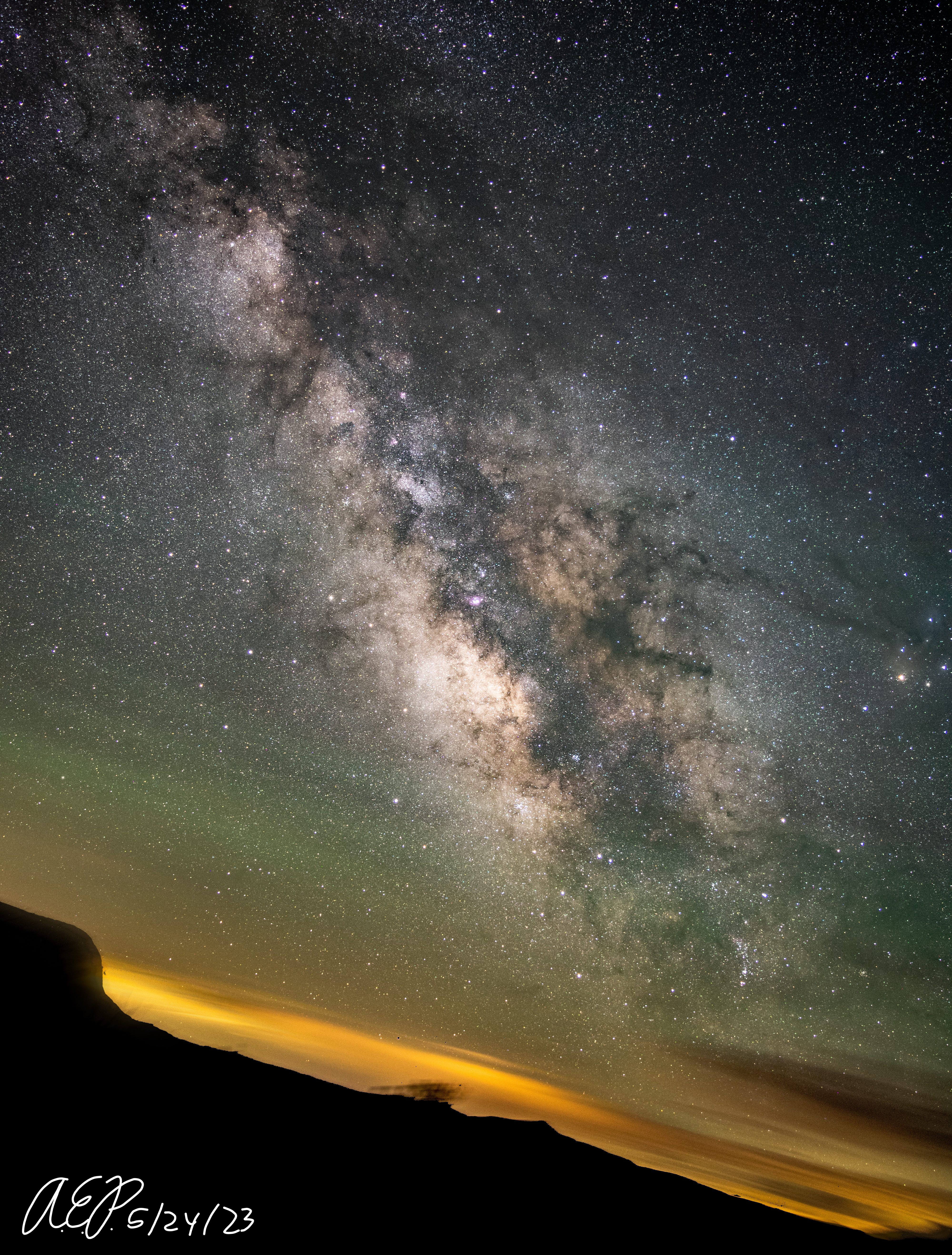
This was a very special trip that I wish would have had better weather, but when the clouds DID clear up over Ghost Ranch, New Mexico, the sky and stars were spectacular over the Bortle 2 sky.
On night 2, I chose to focus more on wide angle shots rather than telescopic shots, and got plenty of great Milky Way photos both using my equatorial mount and non-tracking.
The Trifid Nebula

While it wasn’t the first time I captured this famous nebula, this time I chose to focus more on the nebula itself rather than do a wide angle that included a nearby star cluster known as M21.
This was taken on Night 1 of the Ghost Ranch trip I did in May of 2023.
The Leo Triplet

I was really happy with the clarity of this image, and was able to get more color saturation in the image than other previous attempts.
This one is one of my favorite targets to shoot, so when I’m able to create a good shot I’m always happy.
Messier 100 featuring Ceres

Ceres was a surprise guest when I decided to snap the M100 galaxy, also sometimes nicknamed the “Sunflower Galaxy.” When I saw on that particular night that Ceres would be visible really close to the galaxy, I knew I had to capture it!
Ceres is the bright funky looking “star” to the left of M100, because each sub-exposure saw it move over the hour or so I spent capturing and exposing the objects in frame.
Waxing Crescent Moon
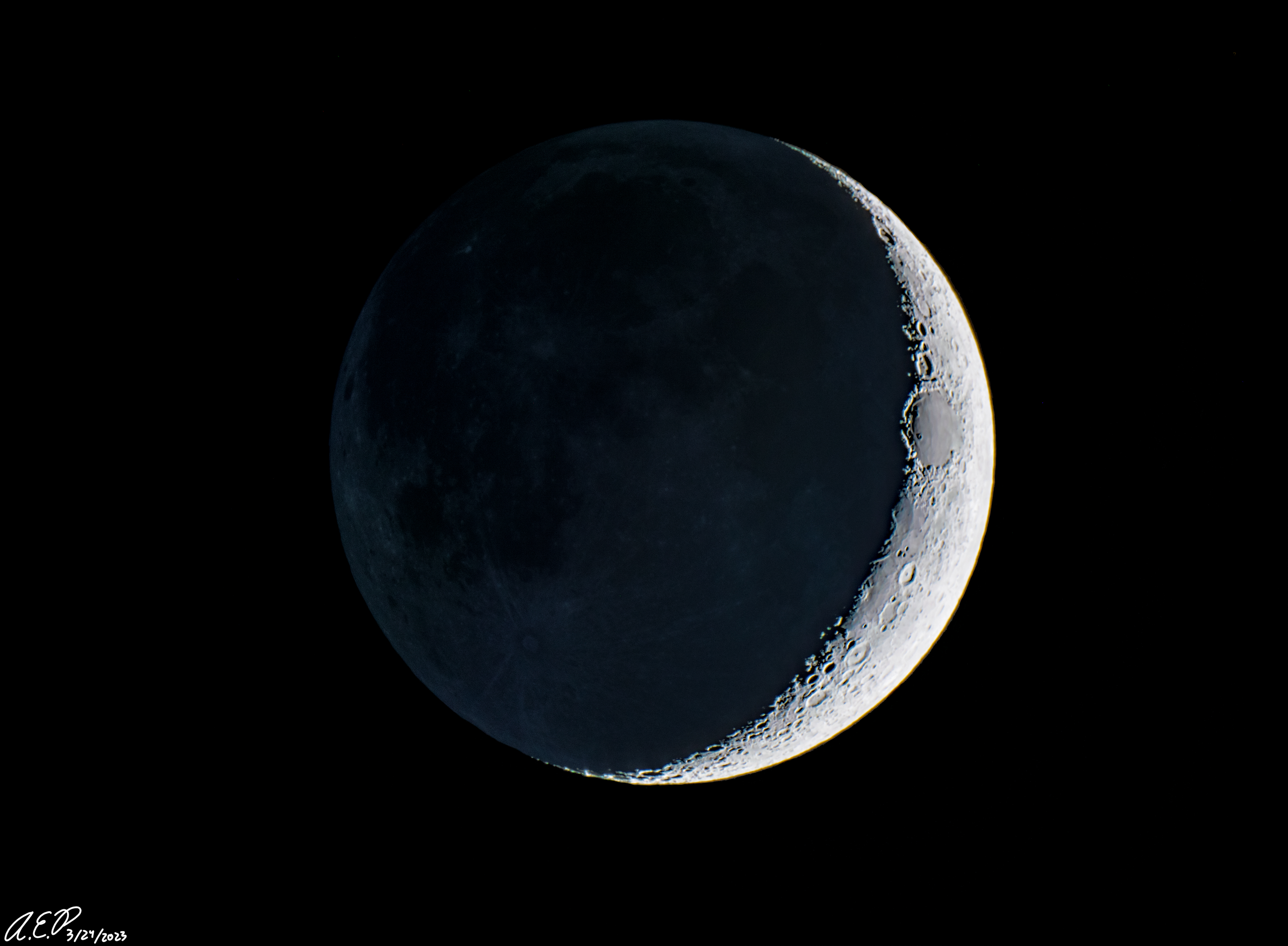
This one was multiple exposures of different shutter speeds layered and combined to create this shot of the crescent moon with earthshine.
I love the clarity and character this particular image provides, as it’s definitely a step above some of the other times I’ve imaged the same phase with the same earthshine glow. I wanted this image to make the waxing crescent moon look exactly as it does to the eye when seen through a telescope.
The Crescent Venus

This was taken through the historic Zeiss telescope at Griffith Observatory… during the daytime! Venus was about 10° away from the Sun when I took this image, and it was really hard to spot because of how close it was to the Sun!
But with careful movement using the precise positions on the coordinates dials, it could still be observed. It was the stacking software that ended up making the image dark as if it was taken at night… the actual recorded video used to get frames to stack in reality was a bright blue sky with a thin crescent barely visible!
The ENTIRE Messier Catalog

This one was three years in the making! It was sometime in 2021 or so when I thought “why don’t I take images of ALL the objects in the Messier catalog? And it was finally completed in June of 2023.
Now the next step is to improve on the individual images to make them better!
This achievement is available to be printed as a poster if you would like to order one from me.
The Annular Eclipse of October 14, 2023

This trip served to put a notch on my astrophotography bucket list. Rather than post a single image of annularity, this eclipse is best displayed as a collage, which comes from data that I aquired from the very start to the very end of the eclipse as seen from Beaver, Utah.
 ORION BEAR ASTRONOMY
Hey Anthony,
I love love love this addition! Your photography is just amazing. It always reminds me of the immensity and expansiveness and glory of our universe home- Gods home!
<
div>I have a big favor to ask — would it be possib
LikeLike
Hi Georgia58!
It appears the rest of the message is cut off, and id love to see the rest of it. Would you be kind enough to reply with the rest of the comment? Thank you!
LikeLike
Some great images, Anthony. The eclipse collage is brilliant and I thought the Venus image pretty good too.
😶
LikeLiked by 1 person