


Just like cars that suit your everyday needs, when it comes to telescopes, I believe there’s a type for everyone with varying degrees of convenience, portability, and accessibility – it’s the setup that fits YOUR needs regardless of how large, pretty, and technologically sophisticated it is.
Everyone is different, but most people start small and cheaper before they work their way up to a setup they’re willing to pay more for. Some end up becoming telescope makers themselves, some stick to visual views through large setups, while others like me go the astrophotography route.
I will always say that there is no “wrong” way to observe the sky – you do it how YOU want to do it!


However, it can be argued that the “traditional” way into the world of telescopes is not for everyone, especially when a casual viewer with a short attention span gets turned off by the perceived overload of information.
In this case, it matters more that the potential buyers can simply get a telescope that does most of the work for them, and all they have to do is turn it on. The more such technology becomes available, the more people become reliant on it.
So what if there was such a telescope that can control with their smartphone, takes live stacked exposures automatically, and shows “live” views of the deep sky in color detail versus grayscale?
What if one could just instantly become a hybrid astro-photographer overnight without all the extra steps in a setup that’s super convenient to own?
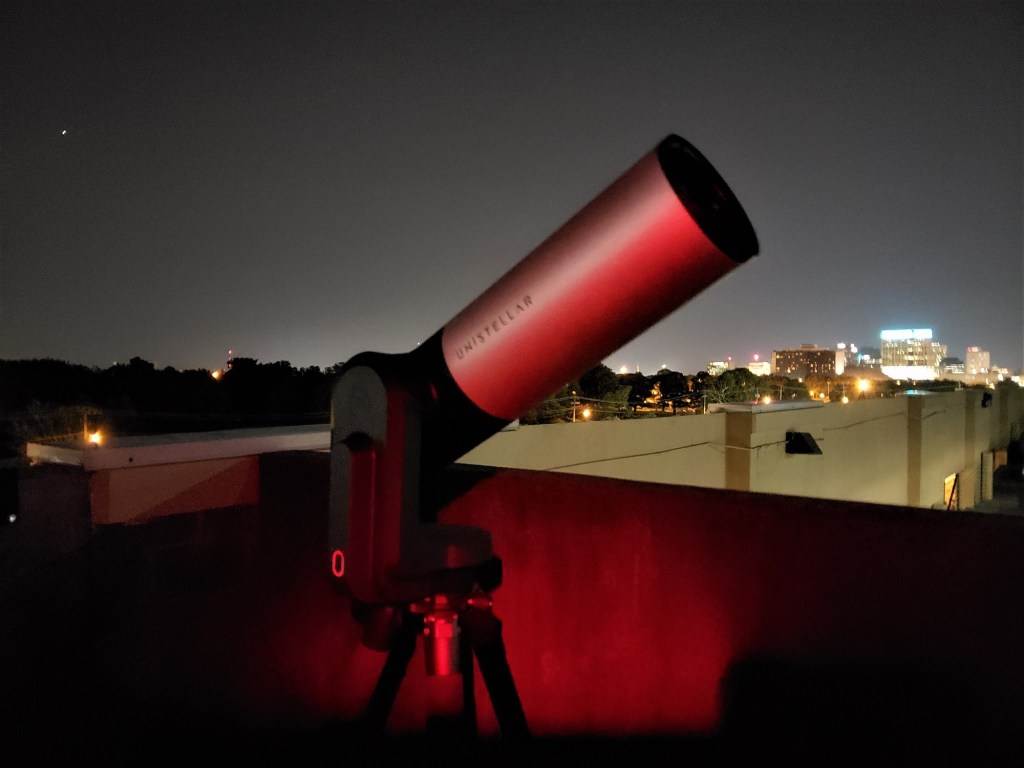

For the hefty starting price tag of $2,899 – $4,000, that’s what the Unistellar EVscope and Vaonis Stellina Smart Telescope essentially offer.
Traditional telescopes through an eyepiece show grayscale views of nebulae and very little structure to galaxies when viewing with just the eyes, and one needs a proper setup to be able to take long exposure photographs with a camera.
I am not talking about traditional computerized GoTo telescopes that have been on the market for decades – and even the more recent models that have smartphone compatibility.
“Smart Telescope/Camera Hybrids” such as The EVscope and Stellina are a different breed and I do not consider them traditional telescopes. Neither do most of the “old school” users who often spam the comment sections on social media with dissenting opinions whenever these products show up in their feed.
So let’s call them “Hybrid Telescopes” to differentiate the aforementioned “Traditional Telescopes”
Are Hybrid Telescopes Scams? No.
Yes, the aperture is small by traditional telescope standards, whether it’s the EVscope’s 114mm (4.5 inch) diameter, or the Vaonis Stellina’s 80mm. But it’s NOT the size, it’s the included technology that is the attraction, as that is what gives you the full color views.
No, Hybrid Telescopes are not just downloading images off Google and passing it off as an actual live view. They are actual stacked exposures done by the technology included with the telescope. Plus they offer portability and convenience. A lot of people don’t want to perform all those alignment procedures that require near perfect accuracy to work, nor do they want to transport heavy and bulky setups.
Remote telescopes are nothing new either, as many professional telescopes are remotely operated, such as the Samuel Oschin Telescope at Palomar Mountain Observatory near San Diego – it’s controlled by CalTech in Pasadena! Therefore, Hybrid Telescopes offering that same feature is also a plus for those who’d rather not stay outside in the cold while enjoying views through their scope.
They offer a new avenue for casual viewers to get inspired by astronomy outreach!
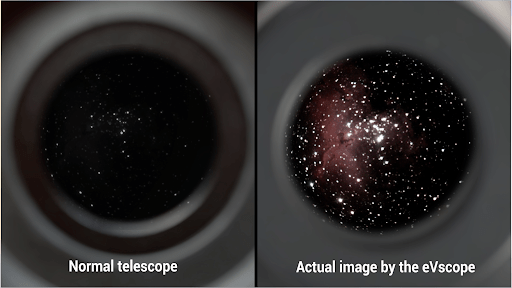
Throughout decades of modern astronomy outreach and in my own experience dealing with public astronomy, a lot of casuals get super disappointed when their views of deep sky objects (nebulae, galaxies, star clusters, etc.) don’t look like the pictures they’ve seen online or in science publications. For example, visually showing the Orion Nebula, or any “green comet” to the Los Angeles public usually gets the greatest hits of questions such as:
“where’s the color?,” “I thought it would be brighter!,” “Why doesn’t it look like the picture?”
Since I actively DO astrophotography and have taken pictures of numerous deep sky objects, I can see it as a good demonstration when I show a viewer what an object actually looks like if their eyes could absorb more light like a camera.
But that doesn’t suit the casual who is uninterested in that information, and just wants a colorful detailed live view in that exact moment we have their attention.
My conclusion is, Hybrid Telescopes are not necessarily a replacement for the traditional setup, but more of a different avenue for casuals that are not impressed the traditional way of observing the deep sky.
So would these devices be great outreach tools? Absolutely!
We all want astronomy to be accessible and inspiring to everyone, including those with short attention spans, and those who want to get into observing the easiest way possible. Hybrid devices can appeal to those that traditional scopes cannot. And if it helps them learn about the cosmos, then who am I to say it’s “wrong?” It’s simply another way!
So then the question is, why is there a level of resistance among “traditionalists?”
Because the technology is offering a “free pass” if you will, allowing a first time user to skip learning to polar align, slew, and fine focus. To do what I do, and achieve what many fellow astrophotographers can capture – it took a lot of time and dedication to learn how to compose “science magazine quality images” as many would say.
I take pride in the deep sky and solar system shots that I share on social media that come straight from my telescope and camera setup. So when Mr. Joe Casual is suddenly able to take decent quality images without having to learn anything, it’s easy to have a level of resentment towards those who never took the time and dedication. It’s easy to think, “hey wait a minute, you mean all of what I learned and all of what I spent is for nothing? What’s the point of it then?!”
So Are They Ultimately Worth the Price Tag?
No!
And I will give two major reasons why!

Reason 1
They are for Deep Sky Objects Only! Planets? Not so much!
What is it that over 90% of people want to observe through a telescope besides the Moon? Without fail, what does the public always ask to see even when they’re not visible on a particular night?
PLANETS!
Hybrid Telescopes are not designed to view the planets!
One of the major flaws with Hybrid telescopes is that it’s one fixed “eyepiece,” hence one magnification setting with no way to change it. The focal length is simply too short, essentially meaning the amount you’re “zoomed in” is no better than a pair of binoculars, therefore even Jupiter will appear super tiny. So if you’re expecting to be able to see big crisp high magnification views of the planets, then you’ll have to stick with a traditional telescope for that!
Reason 2
I have achieved just as good, if not better deep sky images with setups that cost LESS money than what the EVScope or Stellina are asking for!
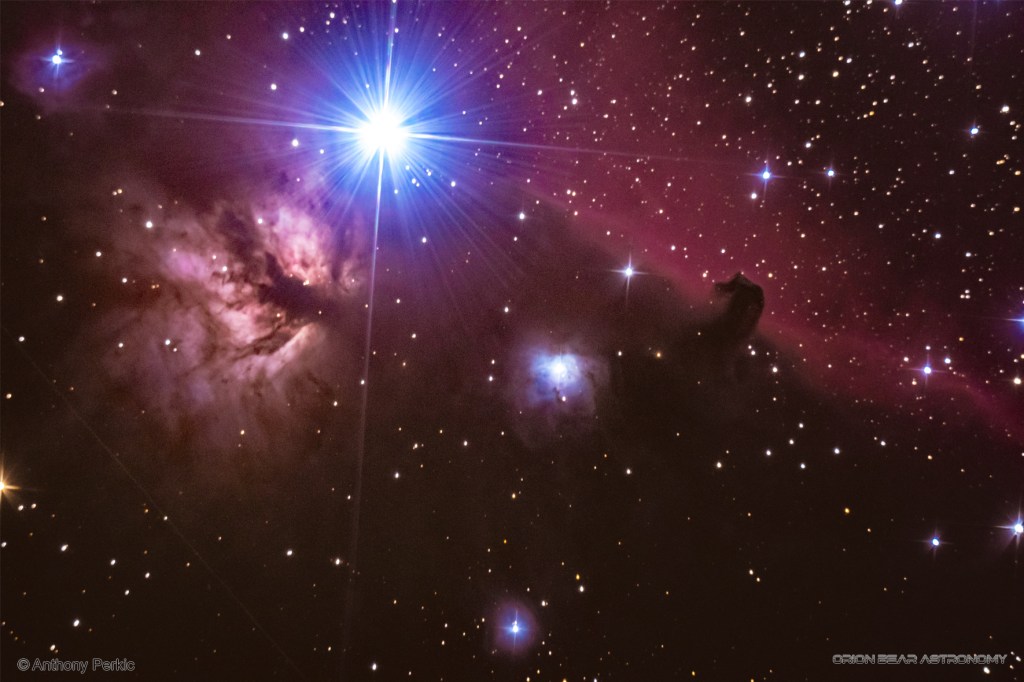
Well, here is the setup I used to take my 10 minute single exposure picture of the Horsehead Nebula in late 2019:
- Orion SkyView Pro EQ w/GoTo and 8″ (203 mm) f/4.9 Newtonian – $1,100.00
- Nikon d5300 – $500
- Starshoot Autoguider w/50 mm guide scope $400. –
So the total setup cost for me to achieve that Horsehead image was about $2000… significantly less than the EVscope’s and Stellina’s price tag. Even if you count the cheap Dell Inspiron Laptop I used for PHD Autoguiding software, the portable battery to power on the scope, and the student price I paid for Adobe Photoshop Elements 15 to process the image, it still doesn’t get over the price tag for the EVscope when they offer a promotional discount!

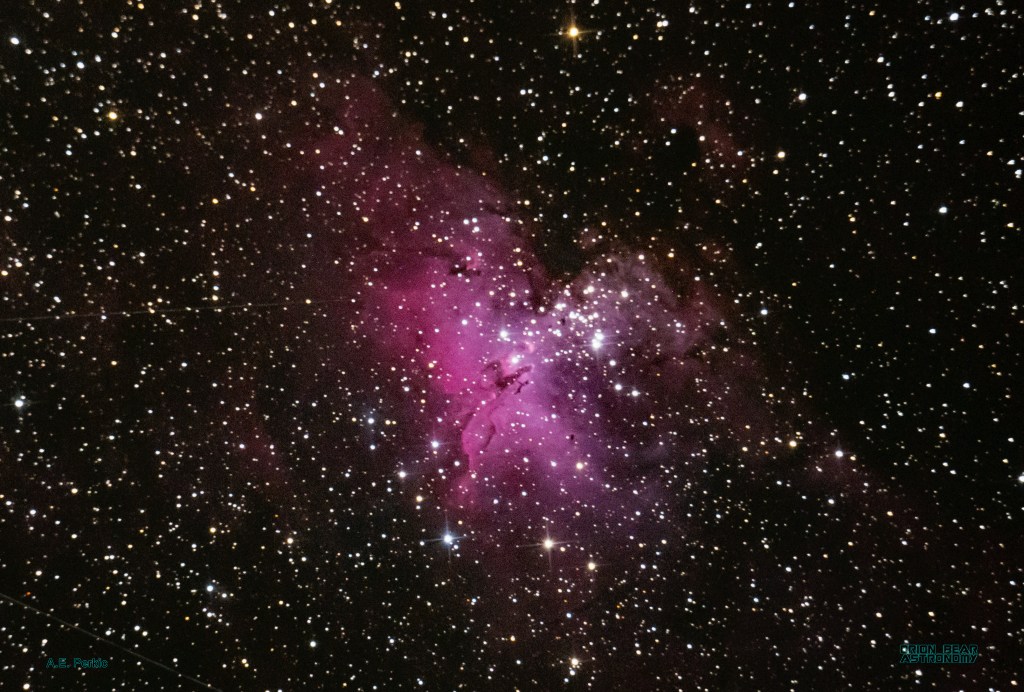
And the best part? It was achieved with SKILL and DETERMINATION! A SkyView Mount is great for introducing you to sturdier EQ mounts, but they are known for their backlash problems, and the total weight of the Optical Tube Assembly (OTA), the 8″ telescope, camera, tube rings, and guide scope/ guider was 2-3 lbs more than the Sky View’s 20 lb max load capacity. The fact that I could get a 10 minute exposure of the Horsehead that night meant I had to get everything right, otherwise the exposure would have seen “morse code” or oblong shaped background stars.

Currently, I pair my same 8″ Newtonian telescope with an Atlas II, which the mount alone is worth about $1,500. So while I’ve paid a total of about $3,000 for my current imaging setup, I’m using a telescope that collects more light and sees more depth into the heavens thanks to the larger aperture, and my images are only going to get better – the results on my first night out with the Atlas II in Joshua Tree National Park speak for themselves.
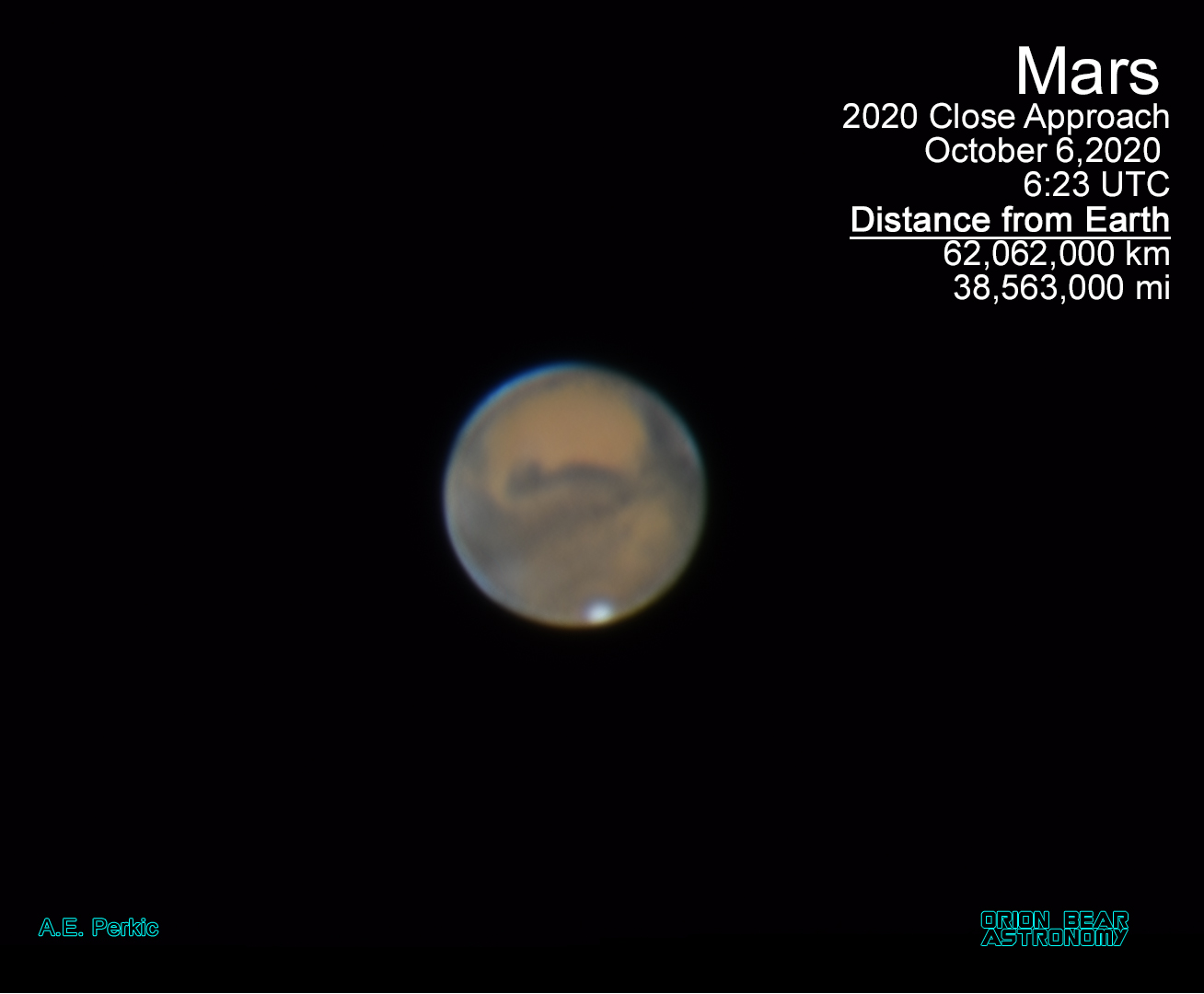
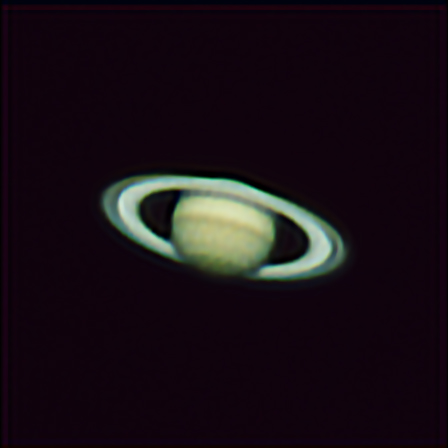
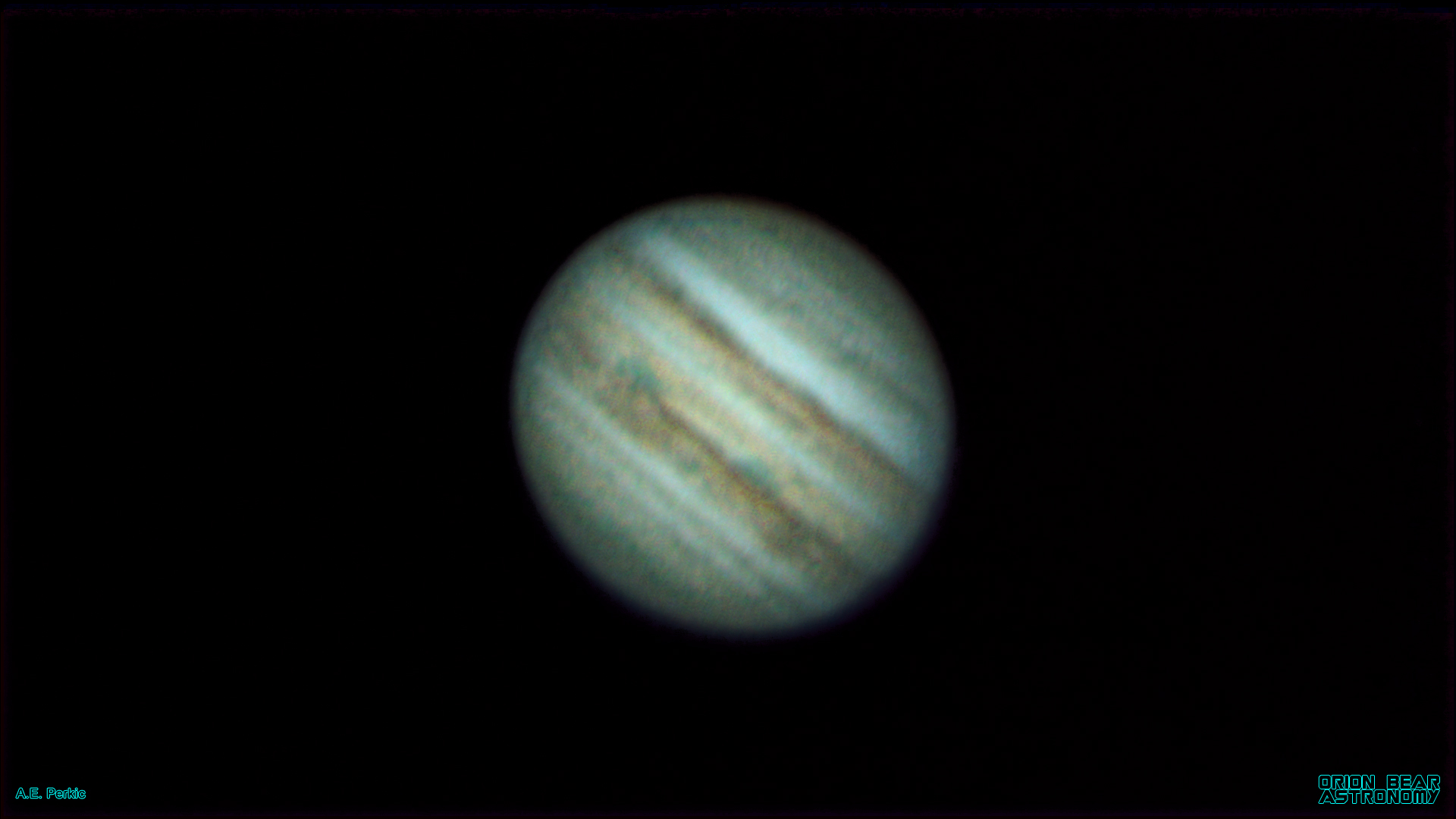
Oh, and I can view the planets up close, and take images of them just fine! I can’t do that with a Hybrid Telescope!


Only time will tell if this technology catches on, and a decade or so from now these types of telescopes become the norm.
But that’s a big IF…
As it currently stands, the simple matter is you’re paying a lot of money for a novelty item that doesn’t offer everything that even a smaller traditional telescope can offer.
If you want something that’s about bright results with ease of use, something that’s super portable and convenient, and has great appeal for outreach purposes, then yes, you might find the price tag worth it. I have seen them at LAAS star parties, and thus chatted with people who own one, and enjoy what they have to offer. For that I say, “Good for them!”
But if you want something for the dedicated astrophotographer who is much more savvy with the processes, then you can find MUCH bigger setups for less money and achieve images that people will say “oh that needs to be in a magazine!” Sure, it isn’t convenient, and these setups are almost too bulky to be considered portable, but my images alone are proof of the dedication achieving better results!
 ORION BEAR ASTRONOMY