


In May 2024, The most powerful geomagnetic storm to affect Earth since 2003 created a once in a lifetime event for the lucky few who witnessed it… by lucky few I mean those living in the Southern latitudes, including yours truly!
This happening a month after the 2024 April 8 Total Solar Eclipse meant I was even luckier to witness two major celestial gifts in such a short amount of time!
When Friday May 10 began, while I had heard news of an expected G4 event happening, most sources were saying that it was possible, but highly unlikely that this would cause aurorae to be visible over the Southern United States. So for a southern California, Greater Los Angeles resident like myself, I didn’t think too much of it.

OF course, I was definitely getting questions from people asking if I was going to try and go see it -hoping they could possibly tag along. But I was already scheduled to work my observatory job in Los Angeles that day, meaning it would be a lot of extra driving on top of the long commute from the high desert.
During the day, the activity was upgraded to a G5 event, but I still had my doubts. I remember discussing it with my supervisor on whether or not we should even attempt, and we both concluded that it probably wasn’t going to happen, and that if I went out, at least I had a nice night in the desert. “But I already live there anyway,” I laughed.

But as night started to fall over the United States, my mind started to change as I was hearing reports from fellow science nerds and stargazers that they were seeing Aurora OVER the southern states. Because the confirmed reports were coming in from the eastern, central, and mountain time zones before it was supposed to happen over the West Coast, that basically told me “okay, I have to take advantage of this and give it a shot!”
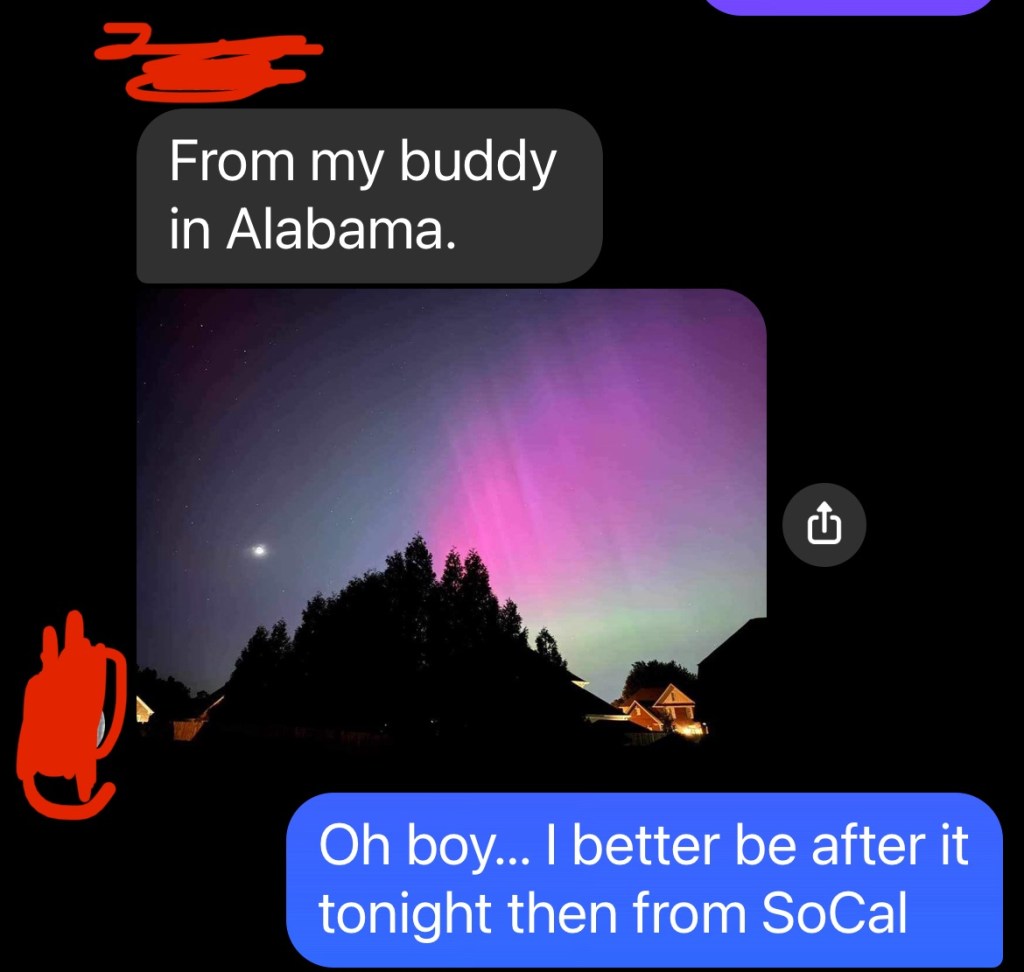
And because of a thick cloud marine layer cutting short any telescope duty for the Observatory in Los Angeles after sunset, that opened the door for me to leave early enough to be at a possible dark site by 11 pm, when Aurora’s usually start peaking in the night.
I chose a spot along US-395 north of Kramer Junction because all I needed was the sky to be absent of city lights to the north – distant lights to the south were not going to bug me too much. About an hour before I arrived, a fellow ‘gazer friend of mine in Colorado posted his pictures on social showing the aurora visible over Colorado, around the 40th latitude parrallel. One thing that I noticed was that from his vantage point, the aurora wasn’t just confined to the north, it was creeping over the southern constellations too! So I thought “then maybe from the 35th parallel, it’ll be a decent showing, perhaps.”
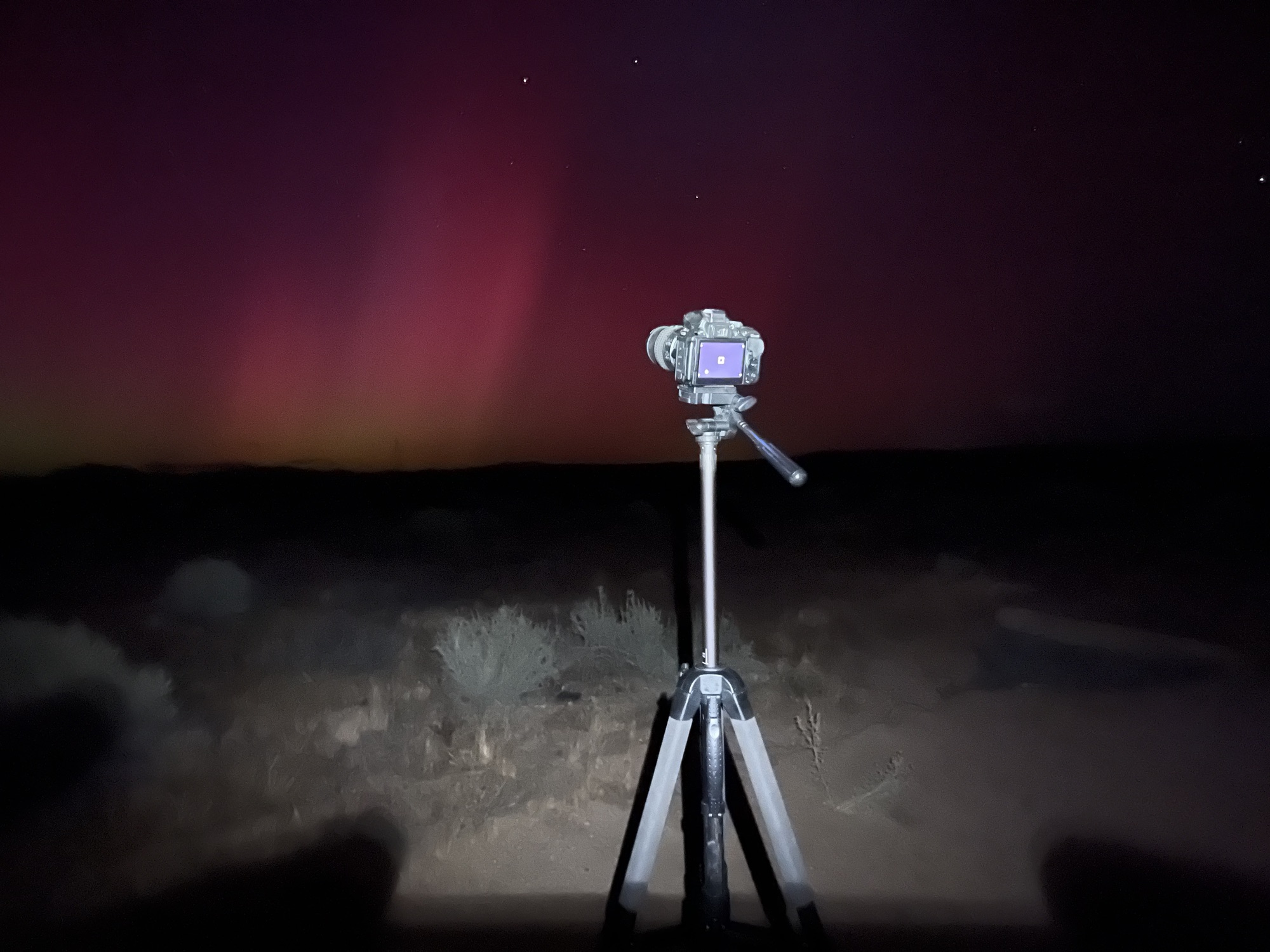
I found a dirt road off the highway, and parked along it. And as soon as I stepped out and looked north, I couldn’t believe what I saw! The characteristics associated with it, such as the sprites and the wispy “curtains” were clearly visible, and changing like a dancing display! Not only that, the entire northern end of the sky clearly had a faint red glow to it. Was it amazingly bright and vibrant to the naked eye? No… in fact my DSLR long exposure shots definitely did more justice to the event. But even to the unaided eye, for someone who had never seen the Northern Lights before, it was still an amazing sight to witness.

Again, I was expecting nothing, maybe a faint haze above the horizon… but this far exceeded what I thought I was going to see from this latitude.

I had the same exact reaction I had when I saw the total solar eclipse a month prior!


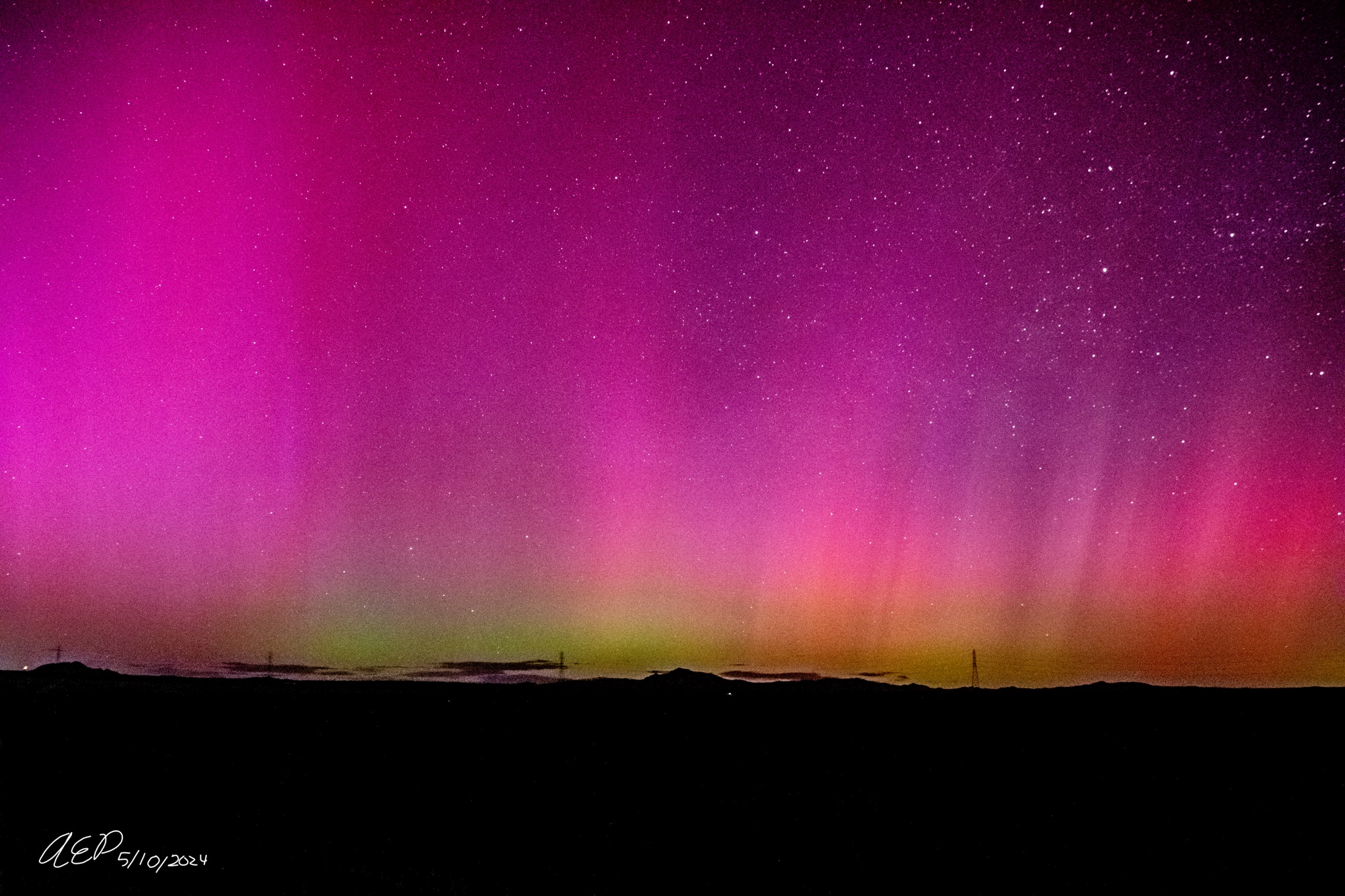

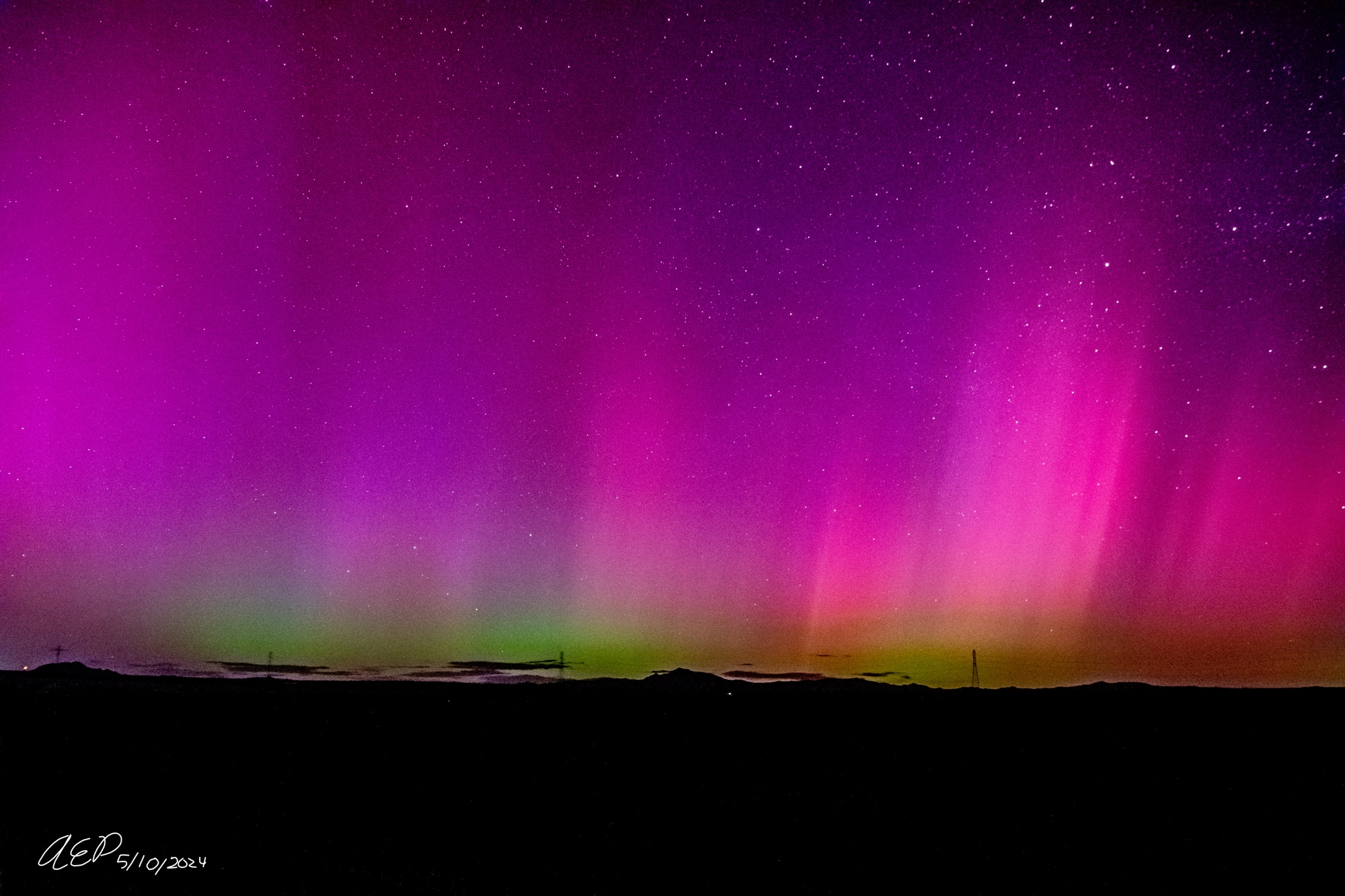

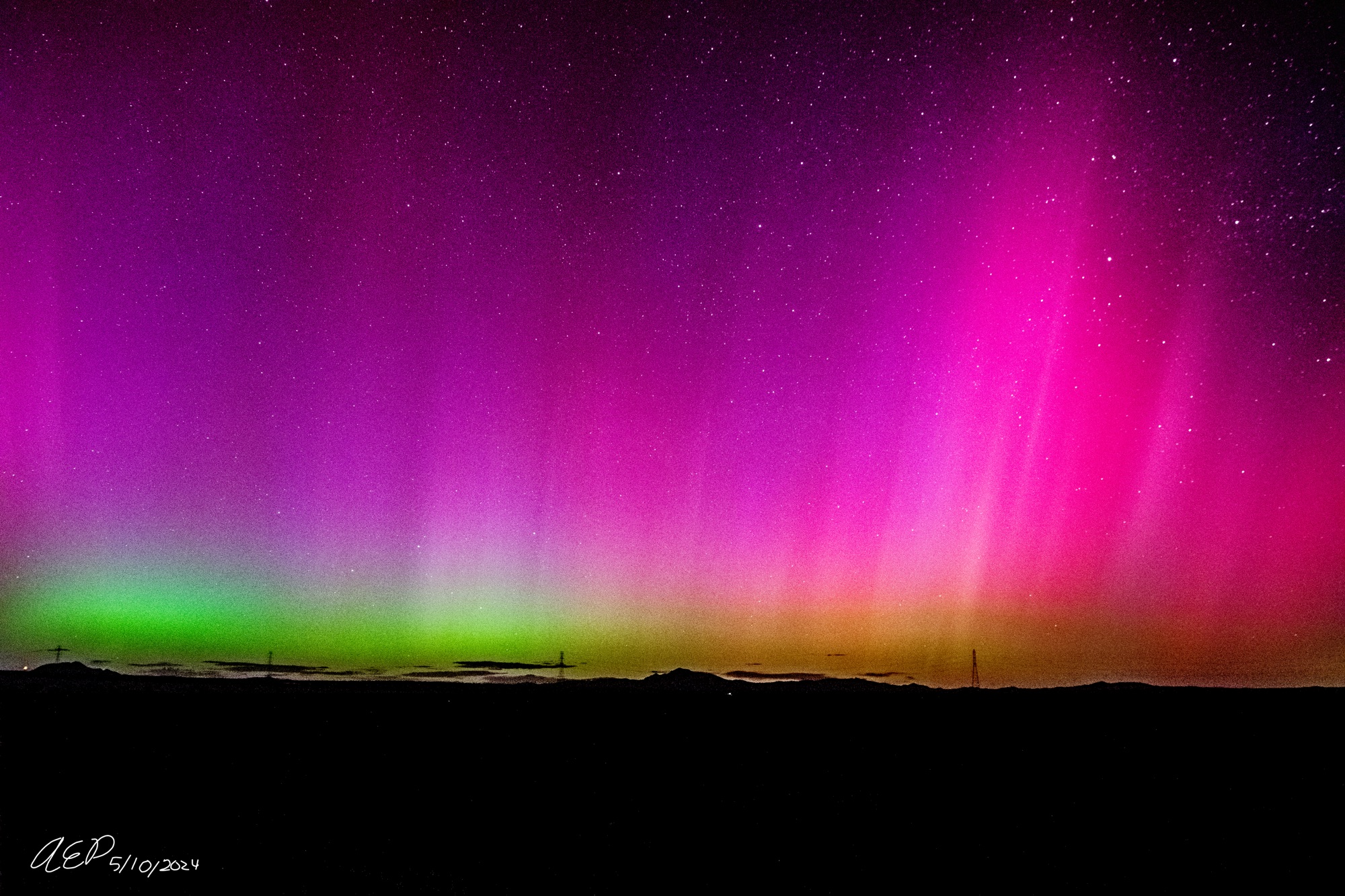
It was at its most intense between 11:30pm-12:30am. Like a peaking event, I even saw parts of green appear sporadically low above the horizon to accompany the red display during this time, while fellow colleagues who observed one degree south of me didn’t capture any green. Had I been further north, then it’s almost certain I would have seen much more green in the sky.
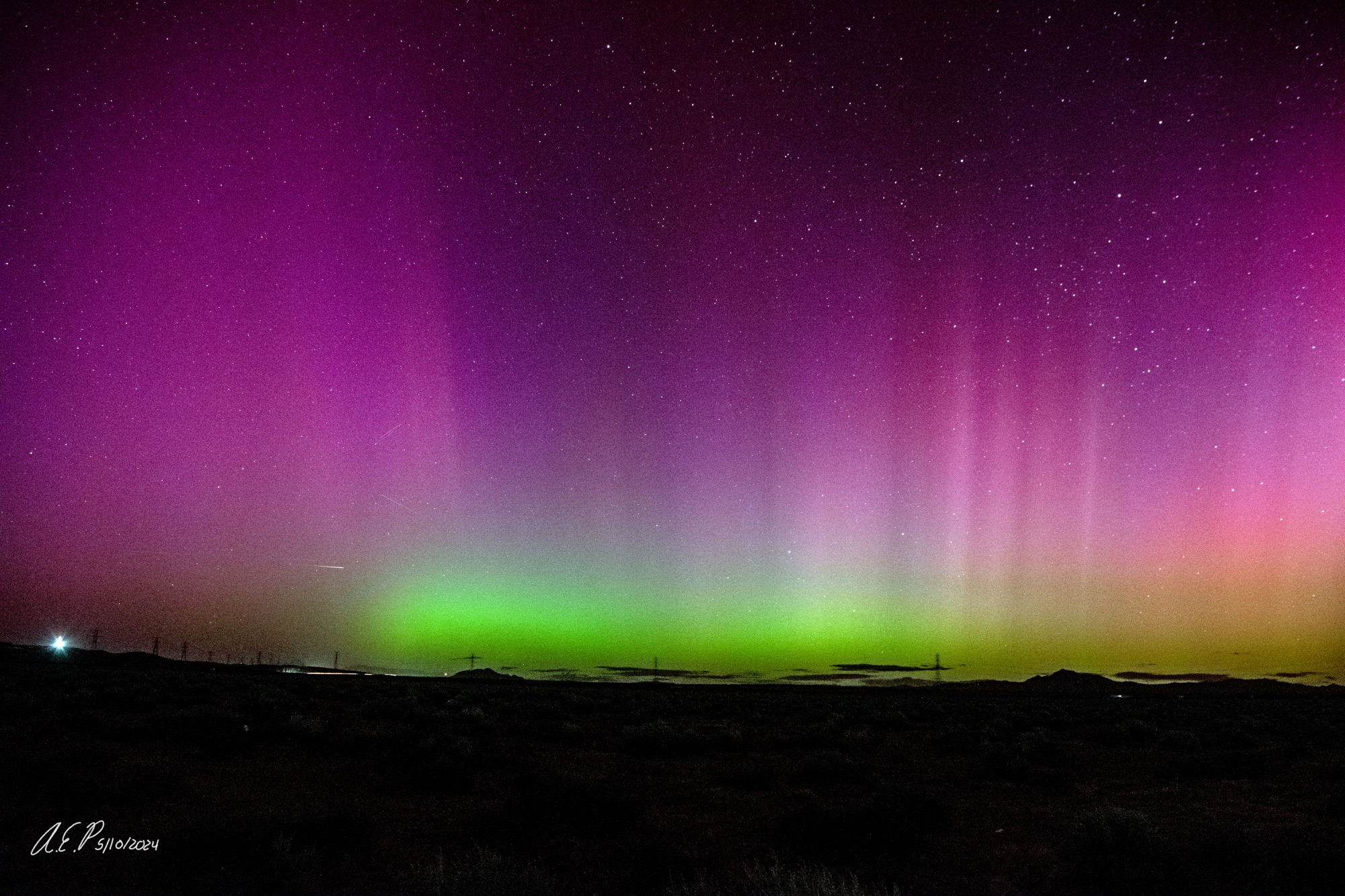

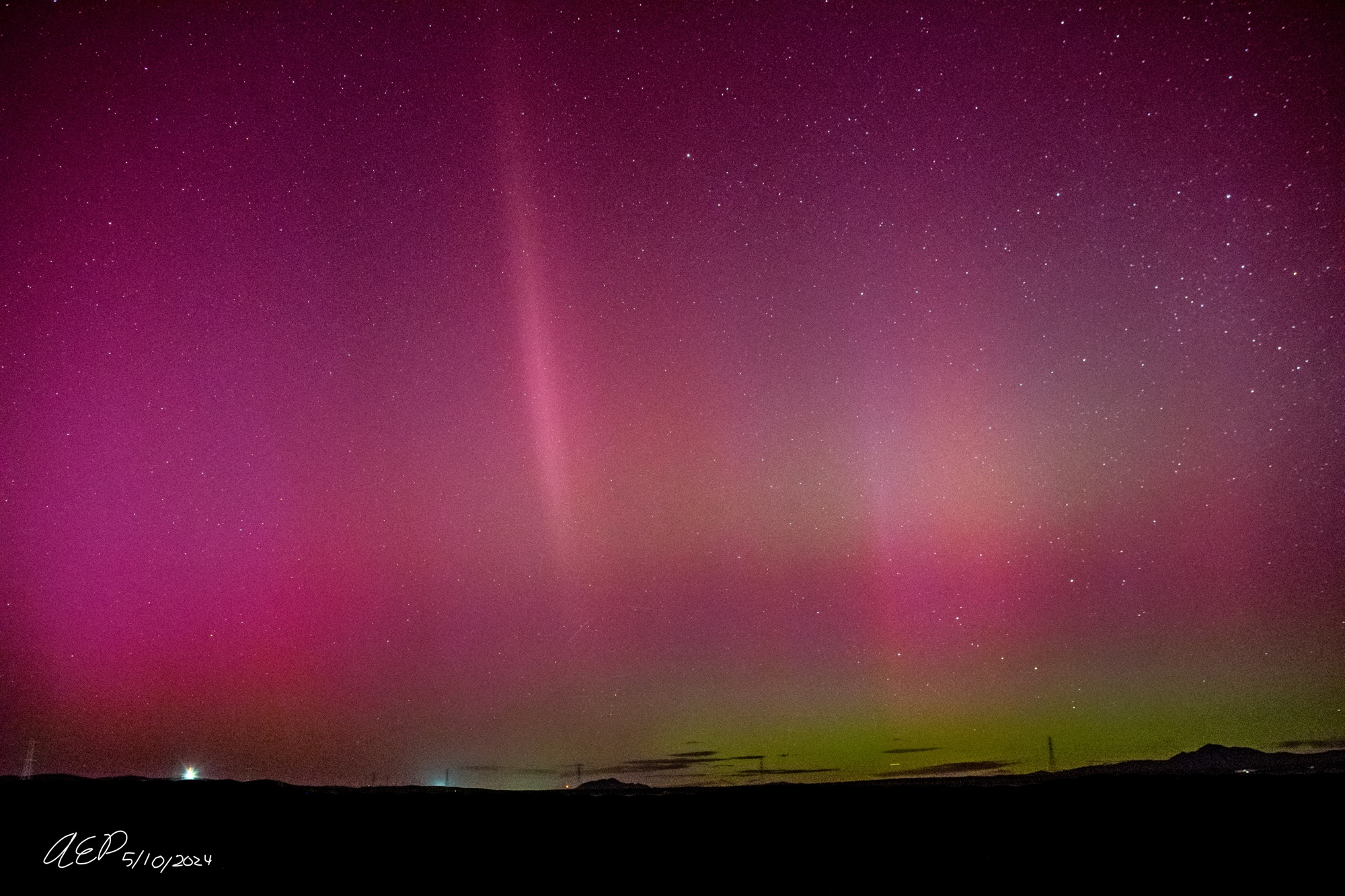
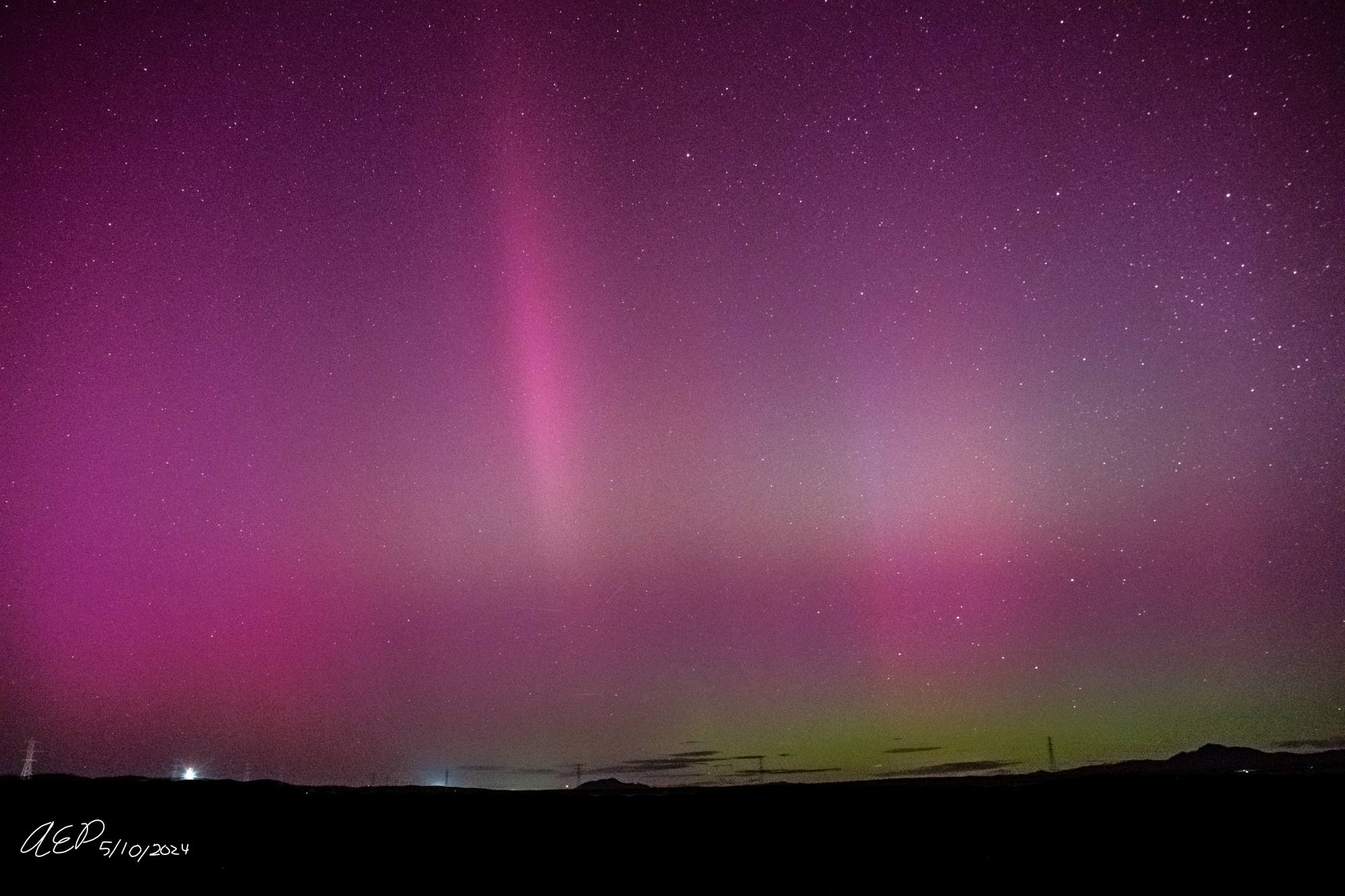


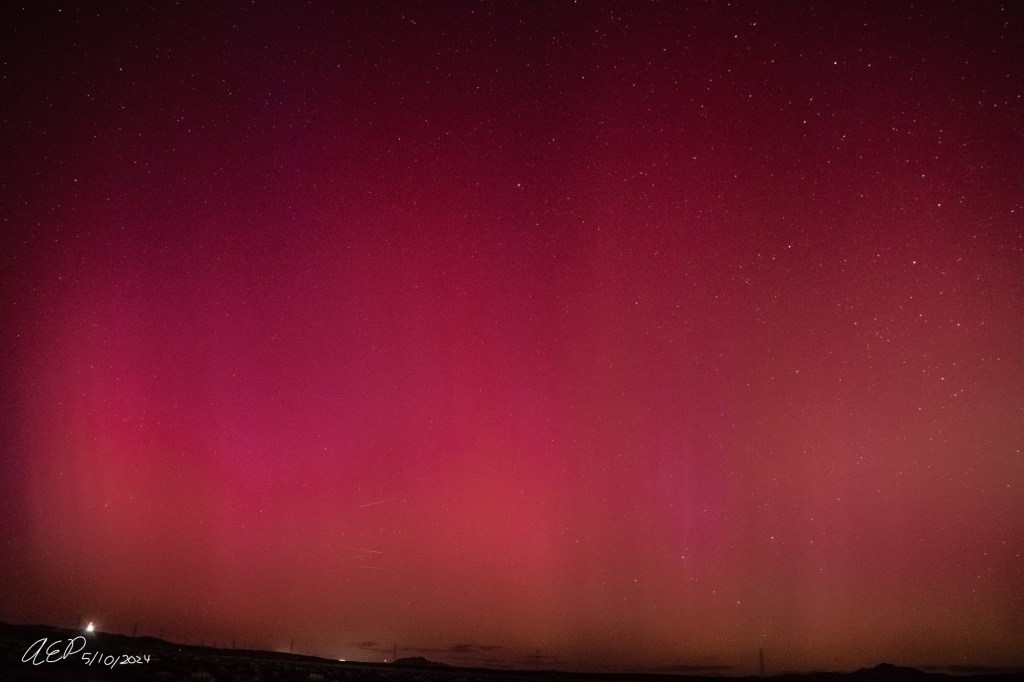

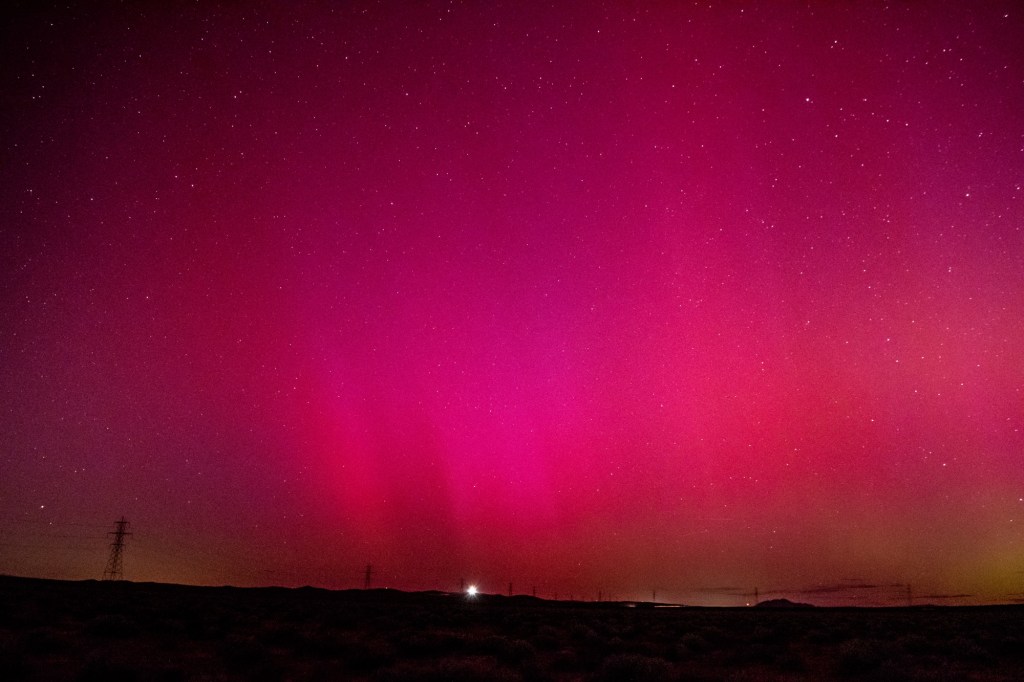

I felt it started to “die down” closer to 1am… the red glow was still present and easily captured with my Nikon, but the “dancing structures” and “moving curtains” associated with it were not as visible.

Before I left, I tried to experiment with the rising Milky Way with the red glow creeping in.

And then as I got home in Phelan around 2am, I noticed the aurora was still happening, but clearly not as intense as it was a couple of hours ago… so to end the night I tried a shot with Joshua trees in the foreground to make it look like it was taken from California.
May 11 Weekend
Aurora Madness over California?


On the next day, May 11… Once the news was out, I knew many more people made the trip out to the darker locations hoping to see the Aurora display over Southern California. Some colleagues tried their luck in the mountains within Los Padres National Forest. Several L.A. co-workers even went as far as trying to see if I was going out again, and wanting to join me at the same spot… I did too good of a job capturing it with my DSLR!
Another colleague of mine reported there was heavy traffic in and around Joshua Tree National Park – worse than what we experienced for the 2023 Perseids in the park – thankfully I knew to avoid that area! I even warned people not to try JTNP for that very reason.

On my way back home from a shift in LA, the roads leading up through the Cajon Pass and into the mountains had more cars than usual for a Saturday night at 11 pm. As such, it was reported that there were thousands of people up in Wrightwood, with many cars just parked along the roads, causing traffic jams in the small mountain town.
A family I’ve been close to for years even tried going to near the same spot I went to the night before – with or without me.
At Mt. Wilson Observatory, it was reported from Saturday May 11, by LAAS members and Mt. Wilson staff that by 1am there were no less than 1000 cars on Mt. Wilson road. Cars were even parked in the traffic lanes, making getting out and going down the curvy mountain road quite a challenging.
But no Auroras were spotted over Southern California for the rest of the weekend! Things seemingly went back to normal for the remainder of the May 2024 solar storm. And by the time the weekend ended, the intense solar flares had largely passed us by.
So It is safe to say that thousands of people made the trips to the spots away from the cities over the weekend in hopes for a repeat performance, but for them, it was all for nothing!
I knew to stay home and catch up on sleep, and why was that? Because I was getting no confirmed eastern reports like the night before. I wasn’t seeing any posts on social about a display for the night of May 10, other than a post showing a low red glow from near Mammoth Lakes, CA… a spot much further north than where I observed.
I cannot stress how UNPRECIDENTED this event on May 10 was!
Yes, Aurora are relatively common – near the polar regions closer to the magnetic poles, hence why they’re nicknamed the Northern Lights (or Southern Lights over near Antarctica).
But over Southern California?
IT’S EXTREMELY RARE!
This was something that may not happen again in my lifetime. But I was lucky enough to follow my gut instinct, have confirmed reports in time zones ahead of me, and capture what I captured.
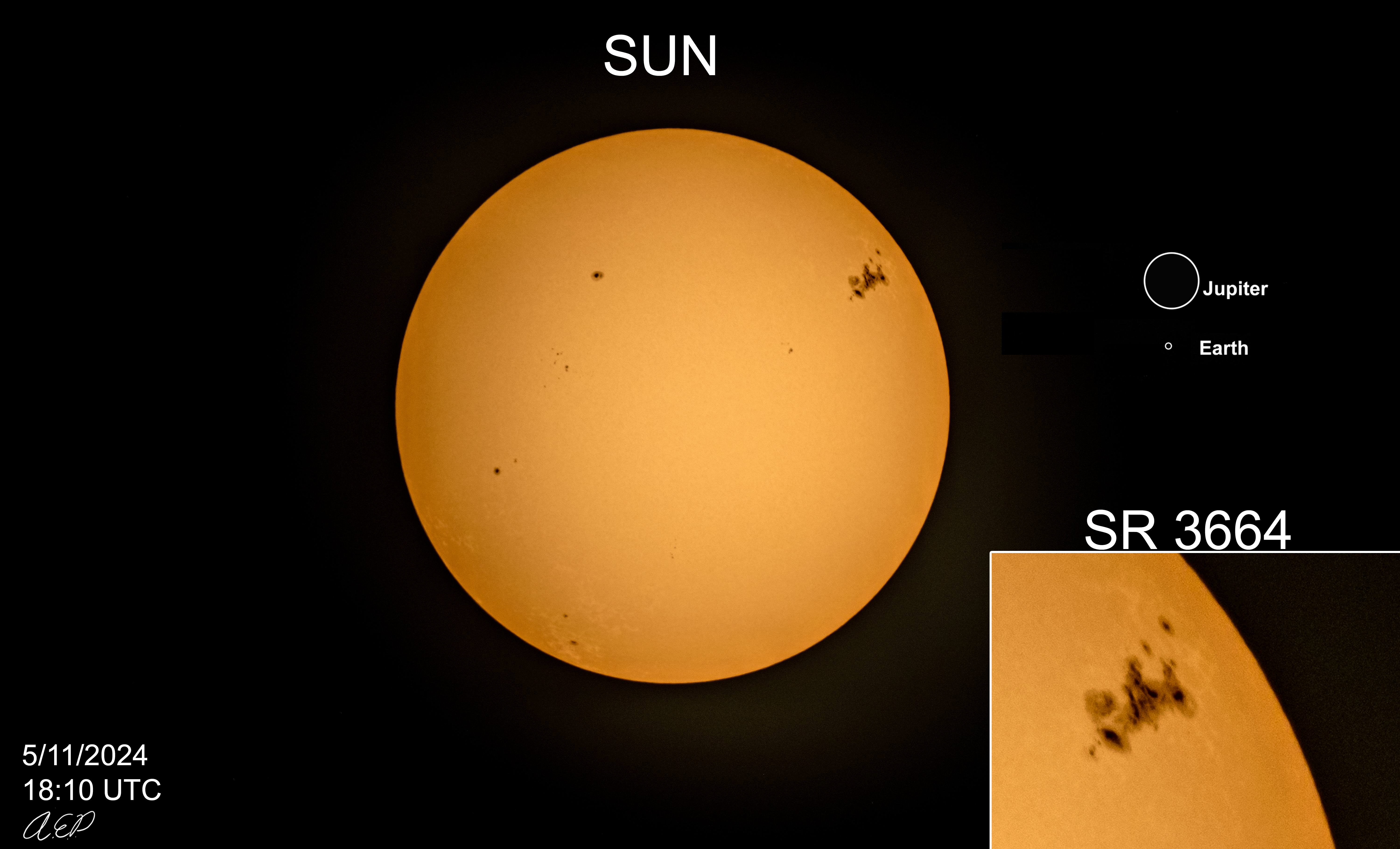
And I was only able to see it from the Mojave Desert because of one of the most intense solar storms on record happening, where an extremely large series of coronal mass ejections arrived on Earth, causing aurorae to be seen over the US as far south as Florida.
Worldwide it was reported as far south as Jamaica and northern Mexico, and over the Southern hemisphere, Aurora Australis was seen as far north as Uruguay in South America.

What happened on Friday, May 10, 2024, was UNPRECIDENTED – It exceeded predicted expectations! If it went went on as normally observed and predicted, then I wouldn’t be writing about this event at all!
Will it be possible this happens again over Southern California or the rest of the Southern US? Never say never!
The 2003 and 1989 geomagnetic storms also had visible aurora reported as far south as Texas and Florida in the US. Even more intense solar storms have occurred in the past, more famously the Carrington Event of 1859… where aurora were visible in latitudes near the equator! That right there should tell you how rare the sight is over the southern states!
From a total solar eclipse to an unexpected celestial gift from the Sun in 2024, this year has already proven to be a big one for astronomy enthusiasts! And we’re only halfway through the year… who knows if another major event will happen!
Keep Looking Up!
– Anthony
Support Astrophotography and Astronomy
I take these pictures and make these trips to observe so you don’t have to! Any donation helps greatly, whether it’s for keeping the site operating, or to be used to help fund the next adventure or piece of equipment!
$1.00
 ORION BEAR ASTRONOMY
Your experience on May 10/11 was remarkably similar to mine! Photographed the aurora from Mt. Laguna in eastern San Diego County. You can see some of my photos on my Facebook page. Yours are excellent. Thanks.
LikeLike