

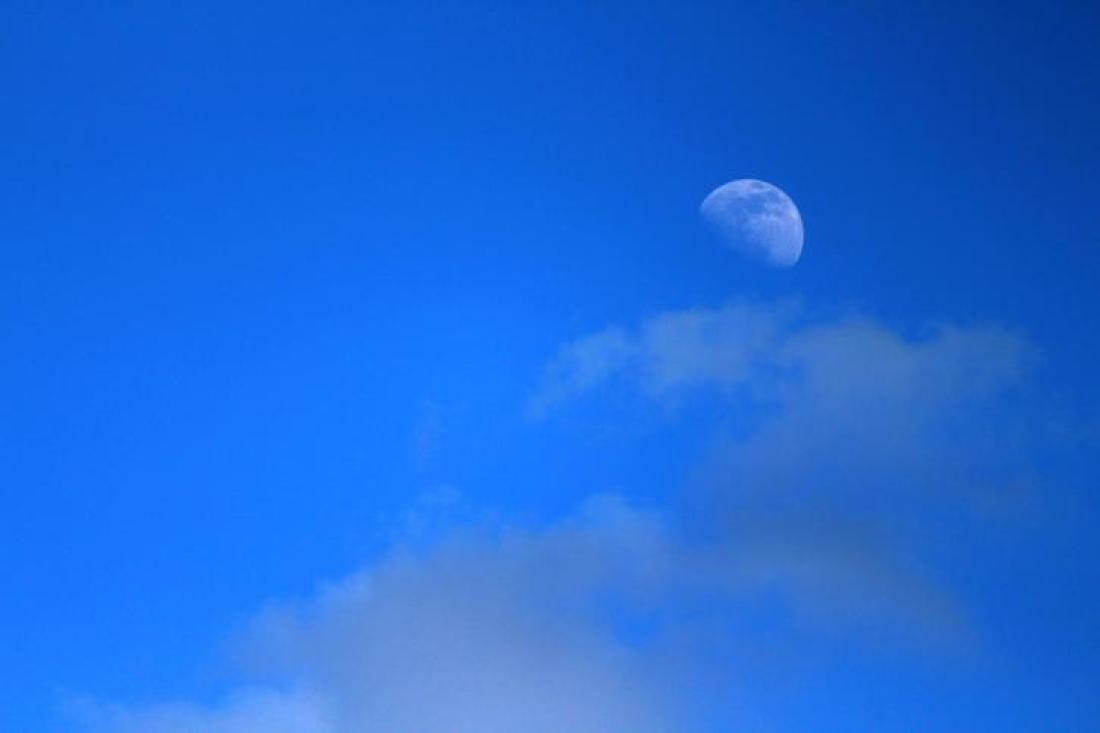
While night is the ideal time to observe any object, sometimes, whether by choice or circumstance, you can begin your observation session during the day while the Sun is still up!
There are two celestial events that only happen during the day, a Solar Eclipse, and a Transit of Mercury/Venus! During those events, only people on the day side of Earth can see them, and with eclipses especially, you have to be in the correct locations, otherwise you can’t even see a partial!
Occasionally, a bright meteor can be seen streaking across the sky during the day as well, yet those moments are very quick and easy to miss!
Let’s say your place offers public telescope viewing beginning around 7 pm. Thanks to daylight savings time, during the spring and summer months, the Sun doesn’t go down until AFTER 7 pm, or after 8 pm in June and July! But that doesn’t matter, the eager people still expect you to show them something, and they don’t want to wait until nightfall due to their own schedule constraints and attention spans!
This article is more about common and a couple not so common things you can look for to observe during the day. And if you are dealing with people who are disappointed that their choices are limited, 1.) they need to be reminded that it’s DAY time, and 2.) if showing them the following objects does not impress them during the day, then I don’t know what impresses them!
Here are your choices!
The Sun
Well, that’s a given! The Sun dominates the daytime sky, and often leaves you no choice but to point your instruments at it. Just make sure your equipment has the proper filters to keep your eyes safe from any damage!
The sun can look rather bland and boring, as most white light filters make the Sun look like featureless orange disc. When Sunspots are visible, then they offer something to present and check out, but otherwise the bland orange disc is all you’ll get.

If you have a scope equipped with an H-Alpha solar filter, then you can see prominences emanating from the disc while the Sun itself will appear red. This is a better alternative when you can’t see Sunspots.
During the day, due to radiation currents coming from the ground, the seeing conditions may make it difficult to see finer details, while the edges of the Sun will look soupy.
The Moon
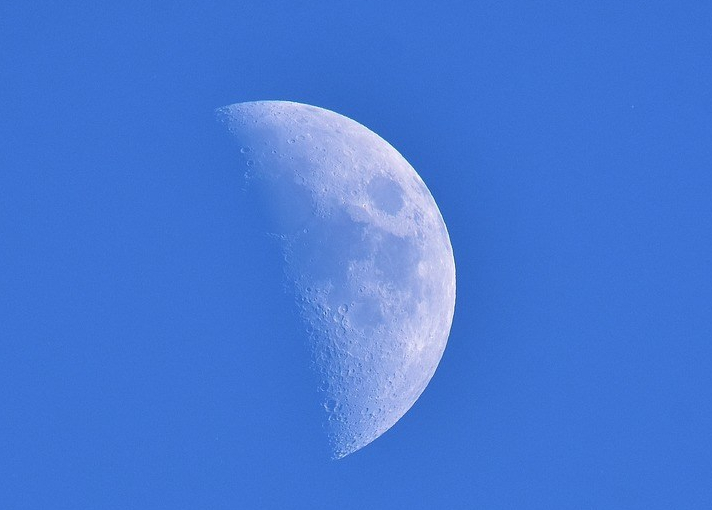
Even during the day, the Moon is a fantastic object to look at through a telescope, and you can easily see some good contrast on the features. A standard lunar filter can add more contrast and less glare if it’s still too difficult to see during the day.
Depending on the phase, you can catch the Moon in the morning, or afternoon. If your prime viewing hours during the spring and summer months star before sunset, your window to observe and show the Moon only lasts for 10 days out of the month during the waxing phases, with all the other days the Moon will either be too close to the Sun, or below the horizon, leaving you with no Moon to view while the Sun is still up.
Planet Venus

This picture of Venus was actually taken during the day, but the stacking software darkened the sky during processing.
Venus is the brightest planet in the sky, and it’s bright enough to spot while the Sun is still high in the sky, you just have to know where to look. It’s bright enough that even your finder scope, or a pair of binoculars should pick it up the white dot in a blue sky.
However, due to its inferior orbit, it goes through cycles between being the “Morning Star” and “Evening Star.” Depending on which part of the cycle it’s in, you will have times when Venus is visible in the west before the sun sets, or it will be shining bright in the predawn hours, and be the last “star” you see before sunrise.
Planet Jupiter

Yes, Jupiter can be observed in the daytime through a telescope! If the planet is far enough away from the Sun’s glare, it can be picked up. Because it’s not as bright as Venus, it won’t appear as bright through your finder scope, and it can be tricky as we’re looking for a white dot in a bright blue sky. But if your telescope is big enough, it should pick up the planet.
The only downside is, don’t expect much detail! Through a good telescope, the disc can be seen as a white circle, and even the cloud bands may be glimpsed during the day, but if people look at it and act unimpressed, you just have to tell them, “well, what did you expect? You’re looking at it during the day! It looks MUCH BETTER at night!”
What About The Other Planets?
It really just depends on several factors: the quality and aperture of the telescope, the quality and conditions of the sky, AND if the object in question is separated enough in the sky from the Sun and not lost in its glare. A clear pristine sky free of haze with good seeing conditions will make it easier, especially if your telescope doesn’t get any reflective glare from the Sun. But if there are any adverse conditions then don’t even try, it will just lead to frustration.
I personally HAVE observed Mercury through a 12″ refracting telescope during the daytime, but it’s not very often, and it’s NOT easy to see. I had to wait until the sky dimmed enough before Sunset before I was comfortable showing it to eager public viewers wanting to check out the telescope.
Saturn I know can also be done, but again it’s extremely tough to spot because it blends almost perfectly with the bright blue sky. I would seriously consider not bothering until after sunset.
The same goes with Mars. Usually when it’s on the same side of the sky as the Sun, it’s much further away in its orbit, therefore it’s much further and dimmer than usual and won’t really look like much if you can spot it.
Uranus and Neptune during the day?

A Bright Enough Star
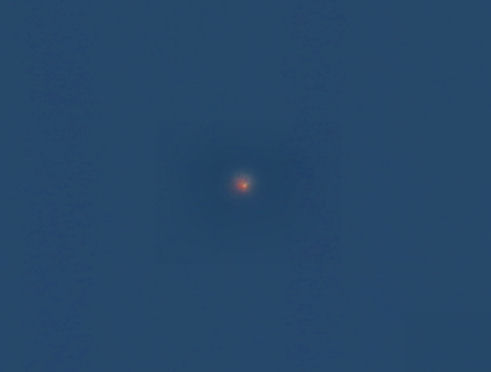
Yes, if you get the telescope pointed exactly where the star is, it is possible! Even with the Sun higher up, stars brighter than magnitude +1 are all accessible with a small telescope as long as the star is 30 degrees or more away from the Sun. That means stars like Sirius, Arcturus, and other zero magnitude stars can be spotted. If the star is closer to the horizon, however, it may be more difficult to locate.
The size of the telescope will also determine whether or not you can spot the star at all. I can usually spot Sirius (-1.33 apparent magnitude) during the day with my 50mm finder scope, and smaller telescopes up to 100mm in diameter should be able to get it. My understanding is that the telescope needs to be at least 8 inches in diameter (or 200 mm) for zero magnitude stars like Arcturus and Vega to be easily seen. Telescopes above double digits in diameter should also be able to spot +1 magnitude stars with relative ease.
They will appear as small points of light, and depending on the clarity and the brightness of the star, they may have decent contrast against a blue sky, or they’ll just appear as white dots. Try not to get too frustrated when the public doesn’t show an appreciation for showing a single distant star during the middle of the day.
An Extremely Bright Comet
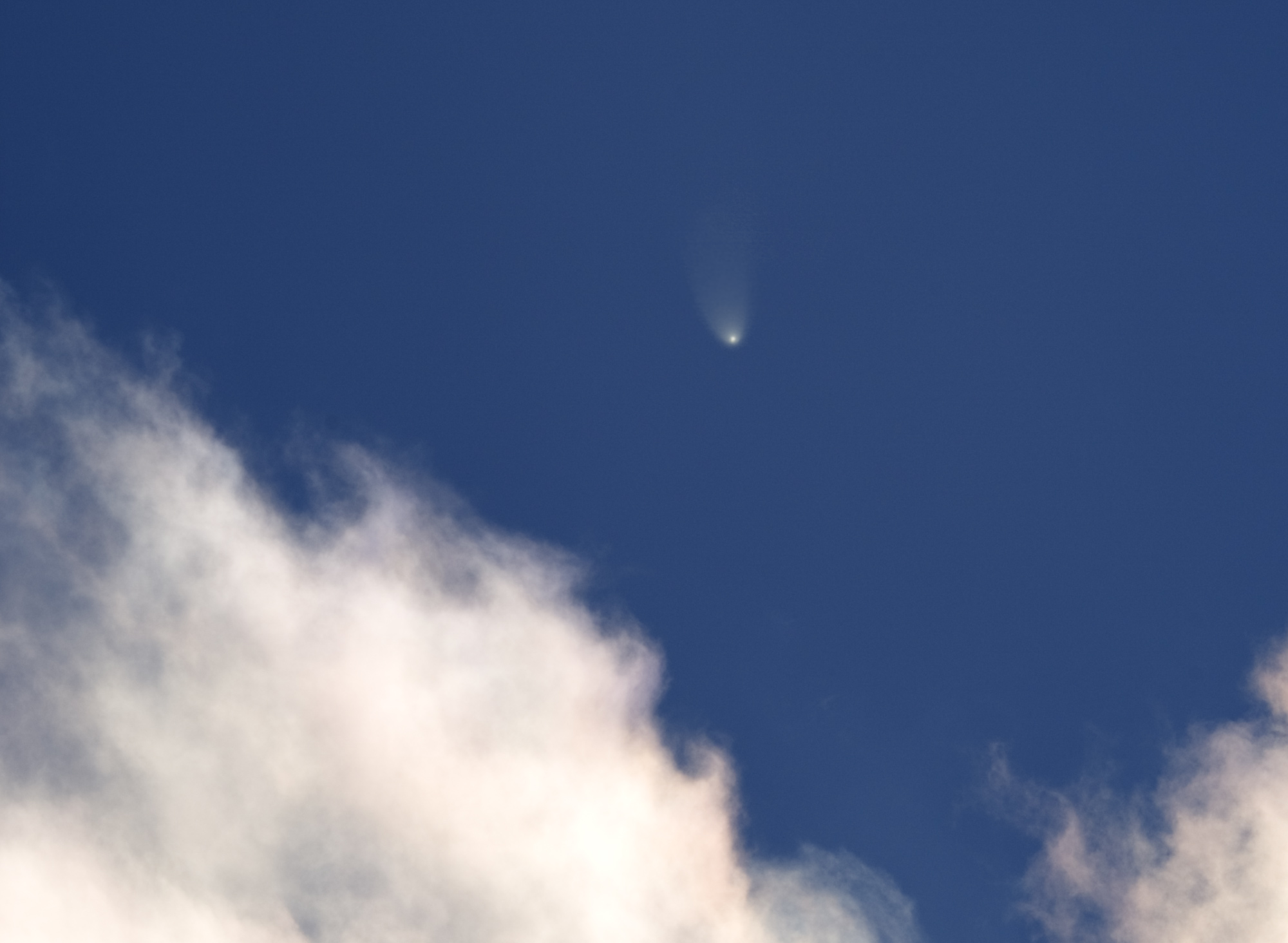
This one is a once in a life time event, but sometimes a comet can get extremely bright, and be visible during the day! Once more, it just can’t be too close to the Sun, but there have been exceptions! Comet Ikeya-Seki in 1965 was a magnitude -10 object within a couple degrees of the Sun, and reportedly was easily seen in clear daytime skies just by blocking the Sun with your hands!
We can only wish that this was a more common choice, but the reality is that comets like these are extremely rare, perhaps only a few per century at the most, and the last one that happened was in 2007. But you never know! If you ever hear that a comet is about the same brightness as Venus, then you should definitely take notice and give it a try!
When it comes to telescopes, if the comet displays an apparent magnitude brighter than 0, then it will be possible to glimpse some details… that is IF the comet isn’t positioned too close in the sky to the Sun’s glare — and unfortunately… nearly all comets are brightest when closest to the Sun due to their respective orbital paths!
A Bright Enough Supernova
While a daytime comet can be a once in a lifetime event, a supernova in our own galaxy that can be seen from Earth, the kind bright enough to be seen during the day, is definitely a once in a millennium event. The last notable one occurred in 1604, which we know as Kepler’s Supernova. We have yet to have one like Kepler’s in this millennium!
While yes, there was a naked eye level Supernova that occurred in 1987 (1987A), it was no brighter than magnitude 3, and actually occurred in the neighboring Large Magellanic Cloud, a dwarf galaxy outside of our own, only visible in the Southern Hemisphere. When will Betelgeuse go supernova? Nobody knows. But when it does, even people who don’t observe the sky will notice it! It’ll definitely be visible in the daytime sky, and if seen at night, will be bright enough to cast shadows!
 ORION BEAR ASTRONOMY